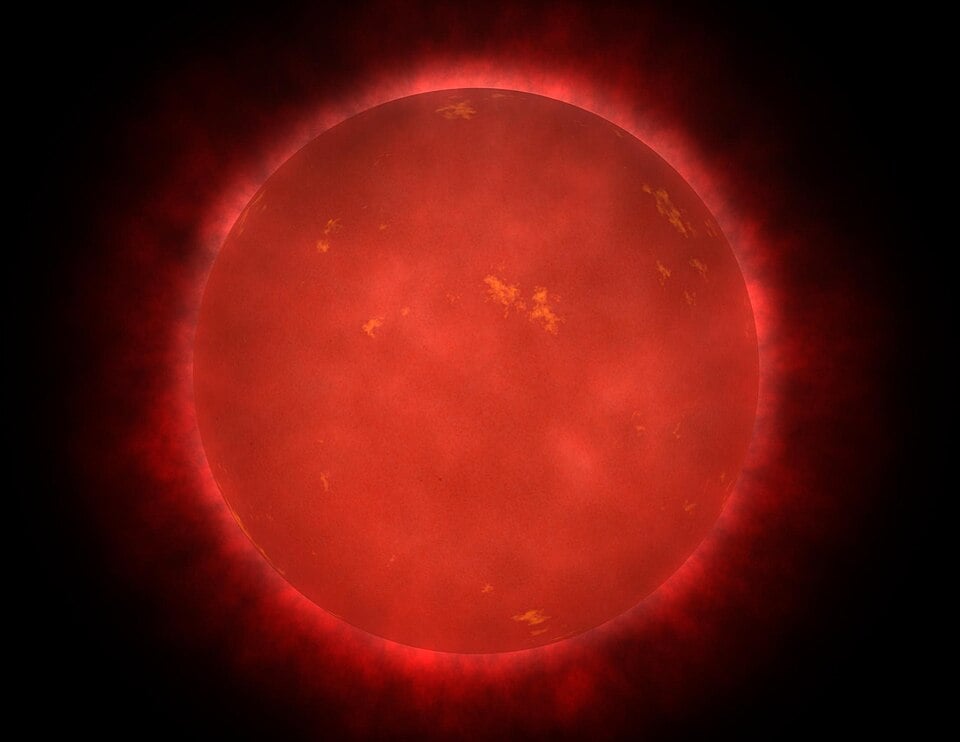
Astronomers have uncovered significant insights into the origins of carbon and oxygen, essential elements for life, by studying nearby red dwarf stars. A research team led by Darío González Picos from Leiden University in the Netherlands analyzed high-resolution spectra from 32 M dwarf-type stars to detect rare isotopes of these elements. This research adds depth to our understanding of stellar evolution and the processes that generate and disperse elements throughout the Universe.
Unveiling Stellar Chemistry
The study’s foundation rests on the stellar spectra, which act like fingerprints, revealing the elements forged within stars. The team focused on the isotopes of carbon and oxygen, which provide clues about the stars’ chemical evolution from their formation to their current states. M dwarf stars, which are among the most common in our Galaxy, have long lifespans and preserve these signatures in their atmospheres.
The researchers noted that the stars they examined exhibited rare isotopes of carbon and oxygen, indicating the products of nucleosynthesis, the process by which stars synthesize new elements through nuclear fusion. Carbon and oxygen are not only abundant in the Universe but crucial for life on Earth, making this research particularly relevant.
Methodology and Findings
Using data from the Canada France Hawai’i Telescope, the team meticulously sifted through a wealth of archived information. The stars studied had effective temperatures ranging from 3,000 to 3,900 K, displaying strong signals for heavier elements, which indicates a high metallicity in their atmospheres.
The research revealed that stars with less chemical enrichment than the Sun contained fewer minor isotopes, aligning with predictions made by models of galactic chemical evolution. Sam de Regt, a member of the research team, stated, “This finding confirms what some models of galactic chemical evolution have predicted and now provides a new tool to rewind the chemical clock of the cosmos.”
The isotopes differ based on the number of neutrons in their atoms, with 99% of carbon on Earth having six neutrons, while a small fraction contains seven. The ability to measure these ratios with unprecedented precision allows astronomers to gain new insights into the chemical processes at play in stars.
The team’s innovative approach stemmed from utilizing high-resolution spectra intended for exoplanet discovery for isotope research, a concept proposed by González Picos. Ignas Snellen remarked on the re-purposing of this data, highlighting the impressive results achieved through this novel methodology.
Implications for Cosmic Understanding
This groundbreaking work not only sheds light on the processes of element creation in stars but also enhances our understanding of the broader cosmic landscape. The findings contribute to a “cosmic detective story,” according to González Picos, emphasizing the importance of understanding our origins in the context of astrophysical events.
As we explore the Universe, the chemical evolution of stars plays a crucial role in enriching galaxies with the materials necessary for forming new stars and planets. The light emitted by these stars carries the history of their journey, reflecting the complex processes of element creation.
In conclusion, the research conducted by González Picos and his team represents a significant advancement in the field of astrophysics. By illuminating the connections between stellar processes and the origins of essential elements, this study deepens our knowledge of the Universe and our place within it.