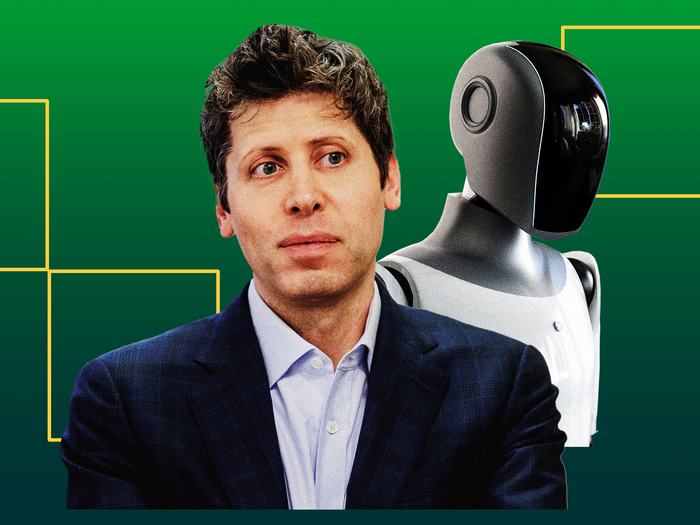
OpenAI is significantly ramping up its robotics initiatives with the establishment of a new humanoid robotics lab in San Francisco. This facility, which has seen its workforce grow to around 100 data collectors, aims to develop robots capable of performing household tasks. This renewed focus marks a departure from the company’s previous robotics efforts that ended in 2020, when OpenAI closed its last robotics program to concentrate on other projects, including its successful language model, ChatGPT.
The new lab operates out of the same building as OpenAI’s finance team and has rapidly expanded since its inception in February 2025. Insiders have reported that the lab’s size has more than quadrupled, with plans for a second facility in Richmond, California, as announced in December 2023. The lab’s current projects include training robotic arms to perform tasks such as putting bread in a toaster and folding laundry, utilizing advanced data collection methods.
Innovative Data Collection Techniques
OpenAI’s approach to robotics diverges from the high-profile demonstrations often employed by competitors like Tesla. Rather than showcasing full humanoid robots, OpenAI is focusing on data collection through teleoperated robotic arms. The robots, produced by Franka, a German robotics company, are being operated using 3-D printed controllers known as GELLOs. This method allows data collectors to guide the robotic arms in performing increasingly complex tasks, starting with simple actions like placing a rubber duck into a cup.
As the project progresses, the focus has shifted to collecting functional data, which is essential for training the robots effectively. OpenAI’s team has reportedly doubled its data collection output in recent months, a critical factor for developing the next generation of humanoid robots. According to Jonathan Aitken, a robotics expert at the University of Sheffield, the company’s methods could provide an advantage over competitors by generating large datasets at a lower cost.
OpenAI’s strategy involves not only real-world data collection but also training robots in computer simulations. This dual approach allows for a more comprehensive understanding of how robots can learn and adapt to various tasks. The company has set up multiple workstations that operate around the clock, capturing both the operators’ movements and the robots’ responses.
Future Prospects and Partnerships
In a recent shift, OpenAI has begun seeking partnerships with US manufacturers to collaborate on consumer devices and cloud data centers, signaling its intent to broaden its scope beyond AI language models. While specific financial commitments or timelines have not been disclosed, the company is actively looking to leverage its expertise in AI to enhance robotic capabilities.
The lab’s focus on household robotics represents a significant pivot from OpenAI’s previous robotics exploration, which included notable achievements like a robotic hand that could solve a Rubik’s Cube. The company is now exploring how the knowledge gained from ChatGPT can inform the development of robots that can better interpret and interact with their environments.
The renewed focus on robotics coincides with broader trends in the industry, where many companies are competing to develop advanced humanoid robots. OpenAI’s efforts reflect a growing understanding that substantial datasets are crucial for training effective AI systems. As noted by Alan Fern, an AI and robotics expert at Oregon State University, the company is in the early stages of exploring how to translate collected data into practical robotic applications.
OpenAI’s advancements in robotics highlight the ongoing race to develop functional household robots, with the company’s reliance on innovative data collection strategies setting it apart in a competitive landscape. As the lab continues to evolve, the implications for both the robotics industry and AI research are significant, potentially leading to new breakthroughs in how machines can assist in everyday tasks.