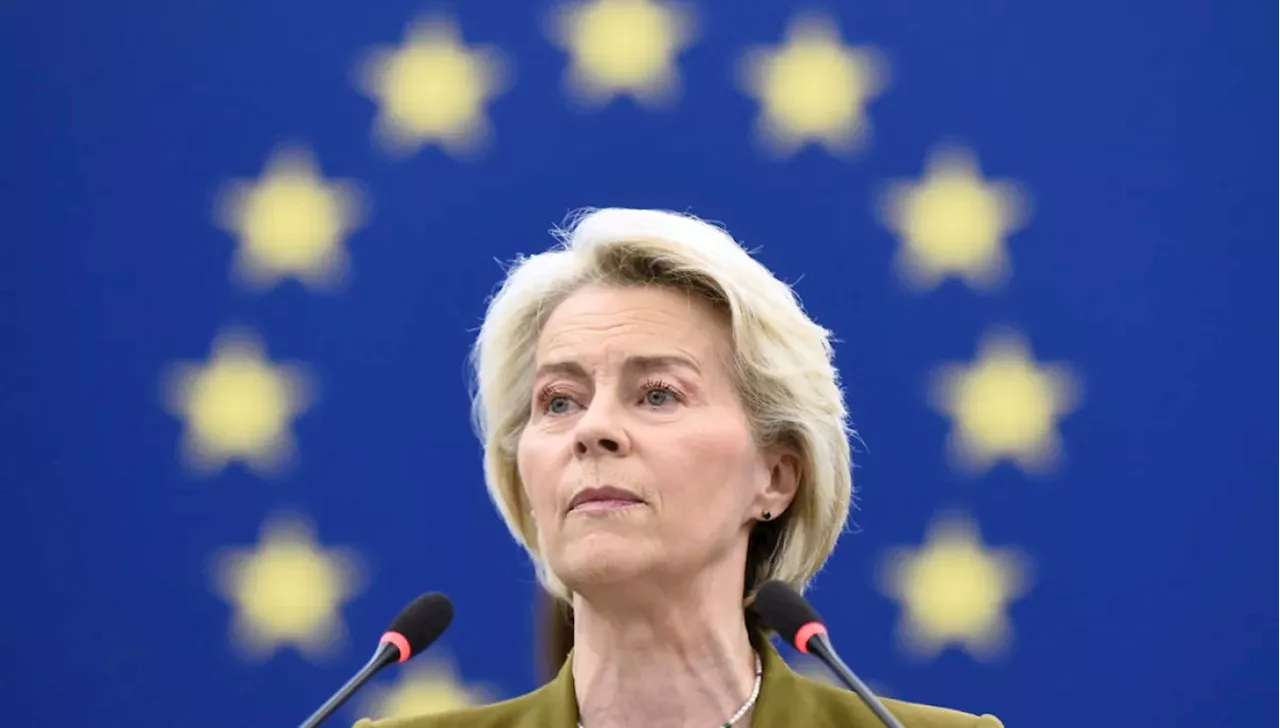
Ursula von der Leyen, President of the European Commission, addressed concerns over potential tariffs proposed by former U.S. President Donald Trump during her speech at the World Economic Forum on January 16, 2024. Emphasizing the theme of “A Spirit of Dialogue,” von der Leyen articulated her vision for a more independent European Union, stressing the importance of cooperation over conflict.
In response to Trump’s tariff threats, von der Leyen asserted that the EU would deliver a response that is “unflinching, united, and proportional.” Despite her firm stance, she underscored the necessity of collaboration, stating, “Arctic security can only be achieved together.” She condemned the proposed tariffs as a misstep, particularly between longstanding allies, reminding attendees that the EU and the U.S. had reached a trade agreement in July 2022.
“Politics, like business, requires integrity; a deal is a deal,” she stated. Von der Leyen warned that allowing tensions to escalate would benefit adversaries that both the EU and the U.S. are committed to keeping at bay.
Embracing Change and Independence
Opening her address, von der Leyen reflected on the profound geopolitical changes since the first World Economic Forum in 1971. She recognized the impact of “geopolitical shocks” but argued these challenges could present opportunities for Europe. “The seismic change we are going through today is an opportunity, in fact, a necessity, to build a new form of European independence,” she remarked.
She noted that the call for independence is not a recent phenomenon but rather a long-standing necessity. “When I introduced the term ‘European independence’ last year, I was met with skepticism,” she stated. “Now, less than a year later, there is a growing consensus around this critical need.”
Von der Leyen articulated a vision for a transformative Europe, where nostalgia for the past must give way to the realities of the present. “Playing for time and hoping for a return to the old order will not resolve our structural dependencies,” she cautioned. “This change is permanent, and Europe must adapt accordingly.”
New Trade Agreements and Global Partnerships
In a significant announcement, von der Leyen revealed a new trade agreement with Latin America, a culmination of 25 years of negotiations, which now establishes the largest free trade zone globally. “This market represents over 20% of global GDP, encompassing 31 countries and more than 700 million consumers,” she highlighted.
The agreement is positioned as a demonstration of the EU’s commitment to fair trade over tariffs and sustainability over exploitation. Von der Leyen emphasized the importance of diversifying supply chains and “derisking” economies amidst global uncertainties.
Looking ahead, she mentioned her plans to visit India shortly after the Forum, where negotiations for a substantial trade deal are underway. “Some call it the mother of all deals,” she said, indicating that this agreement could create a market of 2 billion people and significantly enhance Europe’s economic presence in one of the world’s fastest-growing regions.
This strategic move aligns with von der Leyen’s goal of fostering economic independence while strengthening ties with emerging markets. “Europe is eager to collaborate with the economic powerhouses of this century,” she concluded, signaling a robust shift in the EU’s global trade strategy.
As the world watches, von der Leyen’s declarations mark a pivotal moment for the European Union, with the potential to redefine its place in a rapidly changing global landscape.