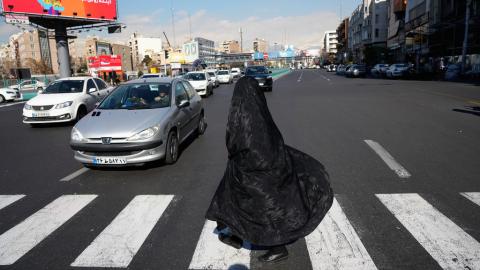
As protests continue across Iran into their third week, the government is intensifying its crackdown, resulting in the arrest of tens of thousands of demonstrators. The regime’s strategy includes a broad campaign of intimidation, with security forces patrolling the streets and issuing threats against those who dare to protest. Despite a significant Internet shutdown aimed at suppressing dissent, reports indicate ongoing violence against civilians.
Iran’s top police official has issued an ultimatum, demanding that protesters surrender or face severe repercussions. The current situation has drawn sharp responses from international leaders, including Iranian President Masoud Pezeshkian, who warned on March 10, 2024, that any military action from the United States would elicit a “harsh response.” He emphasized that an attack on Supreme Leader Ali Khamenei would be seen as an act of war against the Iranian nation.
In a parallel development, Benjamin Netanyahu, the Prime Minister of Israel, addressed the Knesset, cautioning Iran against any military aggression. He stated, “If Iran makes a mistake and attacks us, we will act with a force that Iran has not yet experienced.” He further asserted that regardless of the unfolding events, the country will not revert to its previous state.
Many Iranians remain resolute in their opposition to the regime. One woman, speaking on a radio talk show, articulated the defiance felt by many: “Don’t think everything is over here. We are not finished. Don’t leave us here alone at all.” She poignantly noted the toll of the regime’s actions, stating that “they killed 20,000 of my beautiful compatriots.” Her words echo the sentiments of countless citizens who are determined to continue their fight for change.
The situation is not only confined to Iran, with regional implications arising from the ongoing crisis. Reports indicate that the Syrian Army has been advancing against Kurdish forces in the northeastern part of the country. This military action is accompanied by allegations of horrific acts committed by jihadist groups, further complicating the already volatile landscape of the region. Analysts suggest that the re-emergence of previously imprisoned ISIS fighters poses a significant threat to stability in Syria, undermining efforts to establish a democratic society.
Exiled Iranian Crown Prince Reza Pahlavi has delivered a scathing indictment of Khamenei, labeling him an “anti-Iranian criminal” and asserting that he will be held accountable for the bloodshed. “You have neither honor nor humanity,” Pahlavi stated, underscoring the deep-seated anger among many Iranians regarding the regime’s violent suppression of dissent.
As the protests in Iran continue, the international community watches closely. The combination of mass arrests, threats from regime officials, and ongoing violence paints a grim picture of the current state of affairs. The resilience of the Iranian people, however, remains evident, as they continue to demand accountability and change in the face of overwhelming adversity.