Tensions escalated between the United States and European nations following President Donald Trump‘s recent tariff threats regarding Greenland. In response, the European Union convened an emergency meeting of ambassadors from its 27 member states to address the situation. The meeting reflects growing concerns over the implications of Trump’s actions for transatlantic relations.
During a press briefing, Treasury Secretary Scott Bessent emphasized that the U.S. is prioritizing national security, stating, “We are not going to outsource our national security.” Trump’s assertion that the U.S. needs Greenland for strategic reasons has been met with considerable unease among European leaders, particularly those already facing tariffs ranging from 10% to 15% on various goods.
The eight European nations affected by these tariffs have responded by sending a small military presence to Greenland, asserting that this move is intended to enhance Arctic security as a shared transatlantic interest. A joint statement from these nations declared, “Tariff threats undermine transatlantic relations and risk a dangerous downward spiral.” They emphasized their commitment to dialogue with the U.S., rooted in the principles of sovereignty and territorial integrity.
European Leaders Unite Against Tariff Threats
Danish Prime Minister Mette Frederiksen highlighted the collaborative stance of European nations in her written statement, noting, “Since the U.S. President’s announcement of tariffs, the [Danish] government has been in intensive dialogue with our allies.” She reinforced the importance of maintaining foundational European values and expressed a collective refusal to be blackmailed. Swedish Prime Minister Ulf Kristersson echoed Frederiksen’s sentiments, emphasizing that only Denmark and Greenland should determine their future, while also alluding to ongoing discussions with other EU countries, Norway, and the United Kingdom for a coordinated response.
Germany’s Vice-Chancellor and Finance Minister Lars Klingbeil described the situation as crossing a line, stating that “we must not allow ourselves to be blackmailed.” He assured that Europe would respond decisively to these threats. Denmark’s Defence Minister Troels Lund Poulsen confirmed that he would meet with NATO Secretary-General Mark Rutte to discuss the implications of these developments.
French President Emmanuel Macron has also weighed in, advocating for the activation of the EU’s anti-coercion instrument, which could restrict access to the European single market for U.S. companies. An official from the Élysée Palace confirmed Macron’s intent to discuss this with his European counterparts.
Historical Context and Greenland’s Autonomy
On January 14, U.S. Vice President JD Vance and Secretary of State Marco Rubio met with Denmark’s Foreign Minister Lars Lokke Rasmussen and Greenland’s Foreign Minister Vivian Motzfeldt at the White House. Rasmussen described the talks as “frank but also constructive.” Trump’s threats of tariffs on European allies came shortly after, indicating a willingness to escalate tensions if the U.S. does not succeed in acquiring Greenland.
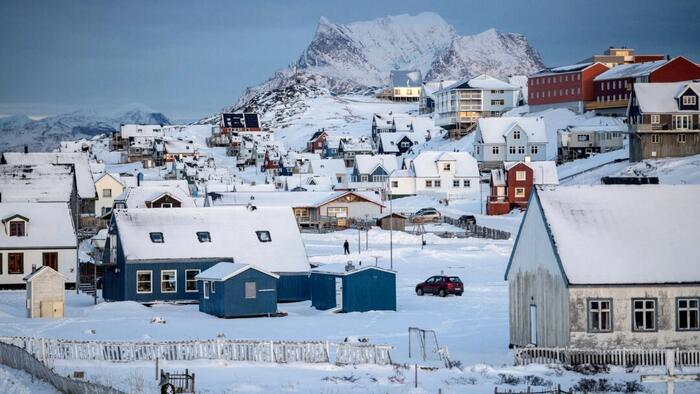
The push for American control over Greenland is not entirely new; it dates back to the administration of President Andrew Johnson in the 1860s. Trump has suggested that Greenland, rich in rare earth minerals, represents a valuable investment for the U.S. The island, while under formal Danish control since the early 1700s, gained self-governance in the 1970s, with full autonomy achieved in 2009. On January 9, Greenland’s leaders, including Prime Minister Jens-Frederik Nielsen, reiterated their commitment to sovereignty, declaring, “The future of Greenland must be decided by the Greenlandic people.”
In a significant development related to the broader implications of these tensions, German politician Jürgen Hardt indicated that Germany might consider boycotting the 2026 World Cup in response to Trump’s actions regarding Greenland. He stated that withdrawing from the tournament would be a last resort to prompt a change in U.S. policy concerning Greenland. Other nations, including Spain, have also expressed concerns about their participation in the World Cup due to the escalating political climate.
The ongoing situation underscores the delicate balance of international relations and the potential for significant repercussions stemming from tariff threats and geopolitical maneuvering. As the EU and its member states navigate this complex landscape, the focus remains on maintaining solidarity and ensuring that the rights of Greenland’s people are respected.