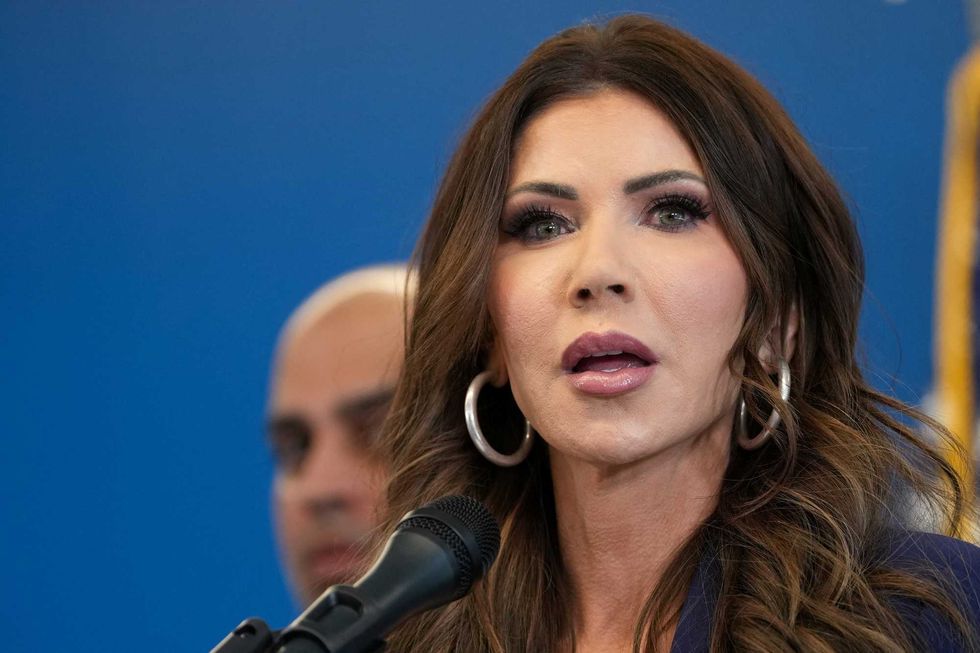
Homeland Security Secretary Kristi Noem expressed strong opposition during a recent interview with CBS News regarding the mention of Jonathan Ross, the Immigration and Customs Enforcement (ICE) agent involved in the fatal shooting of Renee Good in Minneapolis. The incident, which occurred earlier this month, has sparked significant controversy and calls for accountability.
During the interview on CBS’s “Face the Nation,” Noem reacted sharply when journalist Margaret Brennan brought up Ross’s name. “Well, don’t say his name!” Noem interjected, highlighting her concern over the treatment of law enforcement officers in the wake of increased threats against them.
According to reports from Minnesota Public Radio, Good was shot three times by Ross after her vehicle was surrounded by ICE agents on an unspecified date in March 2023. Eyewitness accounts indicate that conflicting commands were issued, with some agents instructing her to “drive away” while others insisted she “get out of her car.” This chaotic situation reportedly culminated in Ross positioning himself directly in front of Good’s vehicle, an action that contradicts a Department of Homeland Security (DHS) memo advising agents to “avoid unsafe positioning” during vehicle extractions.
Calls for accountability have intensified, with critics urging that Ross face murder charges. In stark contrast, the Trump administration has defended Ross’s actions. Noem, in particular, has emerged as one of his most vocal supporters.
During the interview, Brennan pointed out the public nature of Ross’s name, stating, “his name is public.” In response, Noem reiterated her stance, saying, “I know, but that doesn’t mean it should continue to be said.” She emphasized the threats faced by Ross and his family, claiming that they have been subjected to attacks following the incident.
The ongoing debate surrounding this case underscores the complex intersection of law enforcement, public safety, and the scrutiny that officers face in high-pressure situations. As this story continues to evolve, the implications for both law enforcement practices and community relations remain significant.