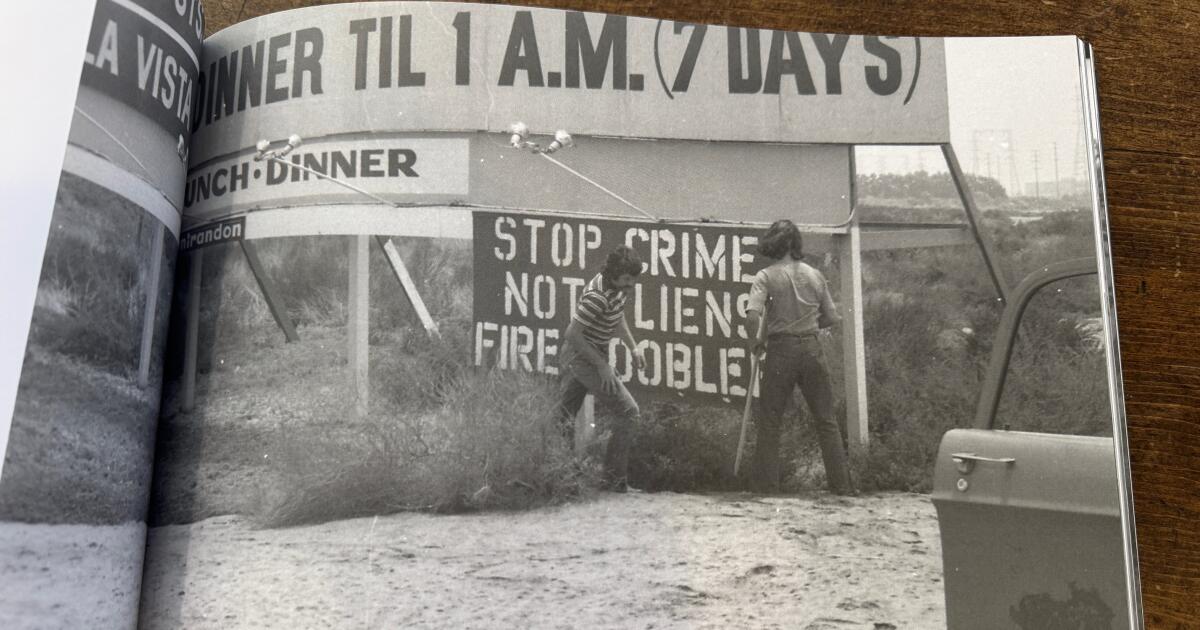
In San Diego County, the Inzunza family, often referred to as the region’s Chicano Kennedys, has unveiled a compelling photo book titled “Movimiento en la Sangre” (“Movement in the Blood”). This collection, which features over 200 photographs taken by Nick Inzunza, documents a pivotal period in the Chicano movement from the early 1970s. The book was celebrated at a launch event on January 10, held at the Museum of Photographic Arts in Balboa Park.
The Inzunzas have a long-standing history of public service, with family members serving on city councils in National City, San Diego, and Chula Vista, as well as on school boards in San Ysidro and Imperial Beach. Their contributions extend beyond politics; they have also been educators, doctors, athletes, and entrepreneurs. Nick Inzunza, a Vietnam War veteran and Chicano activist, played a crucial role in documenting the activism of his time through his lens.
From 1971 to 1974, Nick Inzunza captured nearly 1,800 photos of activists who recognized the need to engage in politics to foster real change. His work illustrates the emergence of Chicano Park, renowned for its murals located beneath the Coronado Bridge in Barrio Logan. The images feature notable figures of the Chicano movement, including Cesar Chavez, Bert Corona, and José Angel Gutiérrez, showcasing them at events, protests, and community gatherings across San Diego and beyond.
The book not only highlights prominent activists but also offers a glimpse into everyday Chicano life during that era. The photographs capture cultural moments, such as after-school boxing programs aimed at steering youth away from gang involvement and community events where Santa Claus distributed toys to children. One striking image features a young Pete Wilson, then the mayor of San Diego, engaging with the Chicano community before his later political shifts.
“Movimiento en la Sangre” fills an important gap in the historical narrative of Latino and civil rights histories, often overlooked in mainstream accounts. Nick Inzunza’s talent as a self-taught photographer ensured that the images are as visually striking as they are historically significant. The book also includes excerpts from his writings, providing context to the photographs. In one letter, he asserted, “The Mexican culture which is all around us can no longer be denied.”
The publication of this book comes more than a decade after Nick Inzunza’s passing and is the result of years of family effort. Ralph Inzunza, Nick’s nephew and one of the book’s co-authors, shared insights into its development during the launch event. After decades of storage, the undeveloped film was finally processed, revealing powerful images that prompted William Nericcio, a professor at San Diego State University, to advocate for their publication.
Ralph Inzunza, who gained notoriety as a city council member and deputy mayor in San Diego, also faced legal challenges related to the so-called Strippergate scandal in 2005. Despite the controversy, he has continued to contribute to the community and has authored multiple books, including a young adult novel and a memoir.
At the book launch, Ralph celebrated the legacy of his uncle, stating, “It is history, and it is not, because it’s alive.” The event served not only as a celebration of the book but also as a reunion of many activists featured within its pages, now veterans of the ongoing struggle for civil rights.
In summary, “Movimiento en la Sangre” stands as a vital testament to the Chicano movement, encapsulating a rich historical narrative through the lens of one family’s commitment to activism and community. The photographs, alongside personal reflections, invite readers to engage with a critical chapter of American history that continues to resonate today.