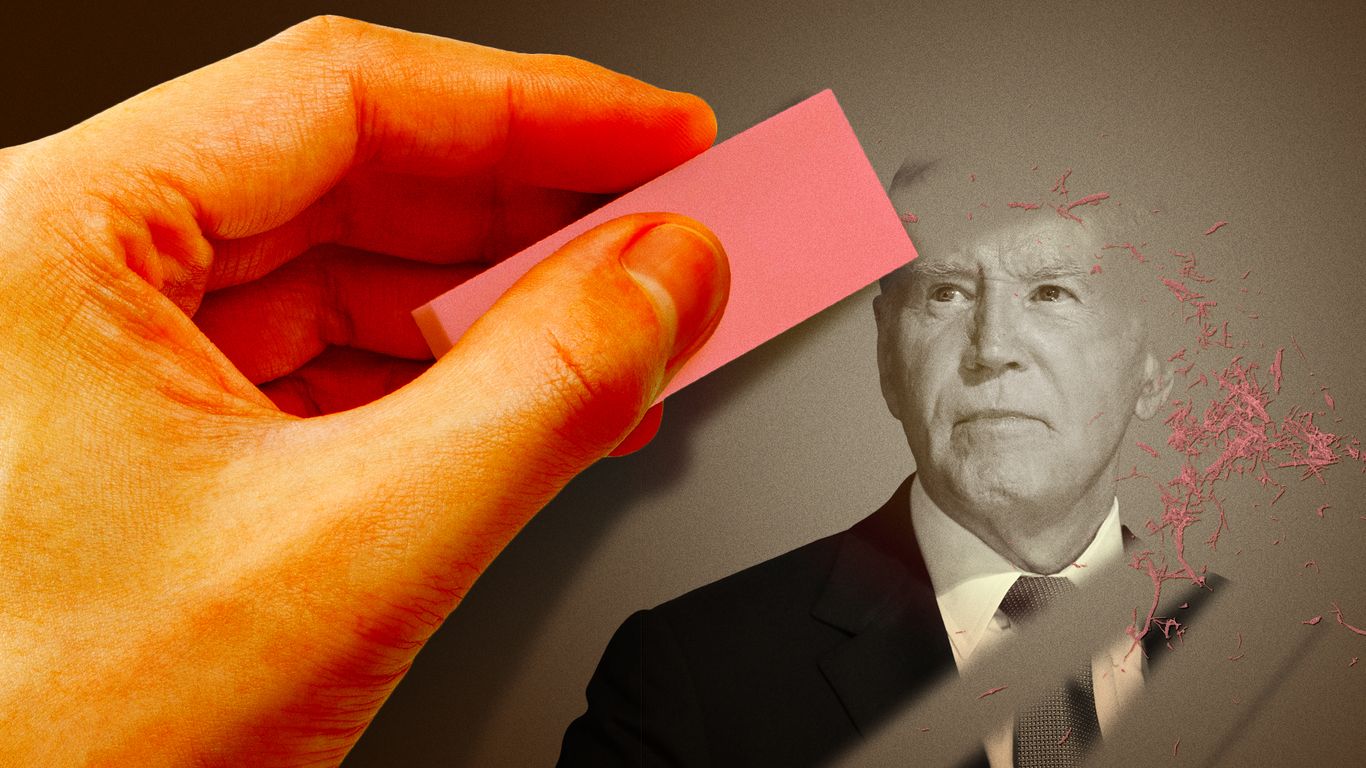
Former President Donald Trump has utilized his first year in office to systematically dismantle the legacy of President Joe Biden, reinterpreting Biden’s presidency as a fleeting episode in American history. Trump’s administration has sought not only to reverse Biden’s policies but also to cast doubt on the legitimacy of his entire term, marking a significant shift in the political landscape.
The implications of Trump’s actions are profound. Traditionally, presidential legacies tend to fade over time, but Biden’s presidency has quickly been relegated to a mere footnote amid Trump’s aggressive policy changes and rhetoric.
Undermining Democracy and Justice
Central to Biden’s presidency was the belief that American democracy had faced severe attacks, particularly highlighted by the events of January 6, 2021. Biden viewed the Capitol riots as a national trauma that required both accountability and a moral reckoning. In stark contrast, Trump has sought to absolve those involved, issuing pardons to many individuals convicted in connection with the January 6 events. His appointments of individuals who have denied the legitimacy of the 2020 election to key positions reflect a strategy to reshape the narrative surrounding those events.
Trump has expressed a commitment to political retribution, launching investigations into Biden’s allies and critics, thereby undermining the perceived independence of the Justice Department. This tactic has raised concerns about the politicization of law enforcement in the United States.
Shifts in Racial Justice and Immigration Policy
Biden emphasized racial justice and equity as cornerstones of his administration. Conversely, Trump has taken steps to eliminate Diversity, Equity, and Inclusion (DEI) frameworks from federal government policies. His administration has condemned what he characterizes as the Biden-era “woke” agenda, repositioning the government as a defender of white Americans against perceived civil rights overreach.
Trump’s immigration policies have also undergone a marked shift. He has intensified efforts to crack down on both illegal and legal immigration, with a particular focus on communities of color, such as Somali Americans in Minnesota. At the same time, he has introduced measures that grant special refugee protections to white South Africans, highlighting a controversial approach to race and immigration.
Rethinking Bureaucracy and Expertise
During Biden’s presidency, there was a strong reliance on expertise and institutional knowledge, particularly in response to the COVID-19 pandemic. Trump has rejected this approach, dismissing thousands of federal employees and prioritizing loyalty over expertise. His administration’s elevation of figures like Robert F. Kennedy Jr., who challenge established public health norms, signals an ongoing shift away from the scientific consensus that characterized the previous administration’s response to health crises.
The phrase “trust the experts” has begun to lose its relevance as Trump leverages alternative narratives about public health and governance.
Environmental Policy Reversal
Biden approached climate change as a critical issue, integrating it into economic, diplomatic, and national security discussions. Trump’s stance sharply contrasts this, as he has labeled climate change a “hoax” and actively worked to dismantle policies aimed at promoting clean energy. His administration emphasizes fossil fuels as essential to economic growth, effectively sidelining climate change as a priority in national discourse.
The rollback of climate initiatives is particularly striking given that Congress had recently enacted significant climate legislation. Within a mere four years, the topic has nearly vanished from the national agenda.
Foreign Policy and Global Alliances
Biden’s foreign policy was grounded in the idea that American strength is best exercised through alliances, exemplified by support for Ukraine and collaboration with NATO. In his first year, Trump has begun to forge a different international order, one that prioritizes unilateral actions and power dynamics over cooperative relationships. This shift has included alienating traditional allies through aggressive rhetoric and economic threats.
According to White House spokesperson Abigail Jackson, “The American people sent President Trump back to the White House because they wanted him to undo every single disastrous policy decision Biden made — erasing his mess is actually the point.” This statement underscores the deep ideological divide between the two administrations.
Trump’s drive to erase Biden’s legacy does not stem solely from policy disagreement but is also deeply personal. His unyielding claim that the 2020 election was stolen fuels his determination to delegitimize Biden’s presidency. This sentiment is exemplified by his decision to replace Biden’s portrait with an image of an autopen in the White House, which serves as a stark symbol of his view of Biden’s presidency.
The current political environment suggests that the legacies of U.S. presidents may last only as long as their successors permit. Trump’s relentless efforts to impose his vision on Washington reflect a commitment to creating a lasting impact, one that could redefine the country’s political and social landscape for years to come.