Venezuelans opposed to the regime of Nicolás Maduro are grappling with a harsh reality as the government appears to maintain its iron grip on power, even after the recent capture of Maduro by U.S. special forces. Many citizens had hoped this significant development would herald a transition to a new government, but those expectations have diminished as the regime continues to suppress dissent and reinforce its authority.
The political landscape in Venezuela reflects a stark continuation of the status quo. Following Maduro’s ouster, no political prisoners have been released, and reports indicate that the government is actively arresting individuals who expressed joy over Maduro’s capture. Armed civilian groups, known as “colectivos,” have been seen patrolling the streets, while military intelligence agents in civilian clothing are conducting roadblocks and monitoring civilian activity.
This atmosphere of intimidation underscores the regime’s determination to maintain control. According to a recent classified intelligence assessment, key figures from the Maduro administration, including the newly sworn-in interim president Delcy Rodriguez, are positioned to ensure stability. The assessment reportedly factored in statements from former U.S. President Donald Trump, who dismissed exiled opposition leader Maria Corina Machado as the best candidate to lead the nation.
For many Venezuelans, these developments have been disheartening. Michelle, a 34-year-old architect from Caracas who returned to the country last year, expressed her disillusionment: “For many years, I wished for my country’s government to change, and I thought I would feel very happy. But that’s not the case.” She added, “Somehow we will have to pay: either with oil or with our own dignity and sovereignty.” Michelle and others prefer to remain anonymous for fear of government retribution.
Trump has made clear his desire for Venezuela, which holds the world’s largest oil reserves, to open its market to U.S. companies. Recently, he stated that Venezuela would potentially “be turning over” up to 50 million barrels of oil to the United States, suggesting that the revenue would benefit both nations.
Yet, not all opposition supporters share Michelle’s pessimism. Luis Mata, a former political prisoner who now lives in exile, remains hopeful. “It’s like eating a pizza — they go slice by slice. We have to trust the process,” he remarked. Mata, who was previously detained for four months following the controversial presidential elections on July 28, 2024, believes that change is imminent. “For me, change is closer than ever. Nicolás is out of the country and will never set foot in Venezuela again,” he stated, though he requested anonymity for safety reasons.
Despite the uncertainty surrounding the fate of approximately 800 to 900 political prisoners, Mata emphasized the importance of the U.S. as a trade ally that supports freedom in Venezuela. His optimism contrasts sharply with the prevailing atmosphere of repression portrayed in the streets of Caracas.
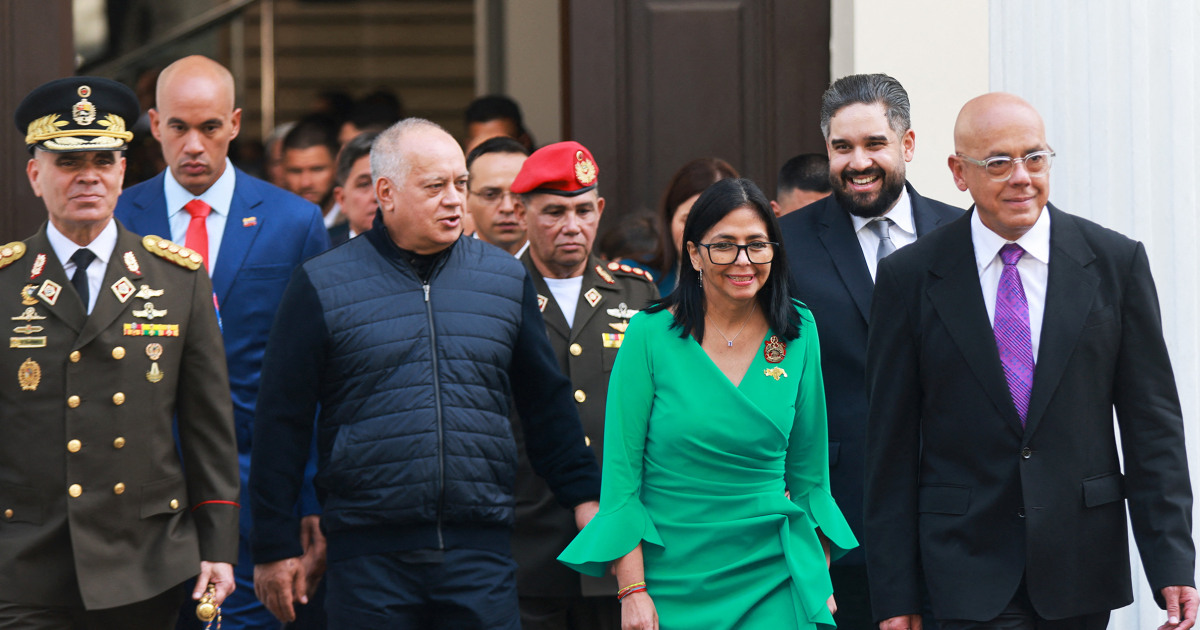
The inauguration of Delcy Rodriguez as president further symbolizes the regime’s continuity. A recent photograph of Rodriguez flanked by key allies, including her brother Jorge Rodriguez and Diosdado Cabello, who oversees police and intelligence operations, serves as a reminder of the administration’s resilience. This image contradicts Trump’s assertions that the U.S. is “in charge” in Venezuela.
James Story, the last U.S. ambassador to Venezuela, highlighted the repercussions for those perceived as supporting the U.S. mission to remove Maduro. “They’re going after anybody who potentially supported the U.S. mission to get Maduro,” he remarked during a recent event.
Everyday Venezuelans like Marlenis, a domestic worker in Caracas, reflect a growing sense of desperation. After enduring a system that has impoverished them over the past 25 years, she stated, “What else can we lose? If everything goes badly, people are already used to bad things.”
As the situation unfolds, the hopes for a democratic transition in Venezuela face significant challenges. The resilience of the Maduro regime and the complexities of international interests continue to shape the fate of the Venezuelan people amidst a backdrop of political turmoil and uncertainty.