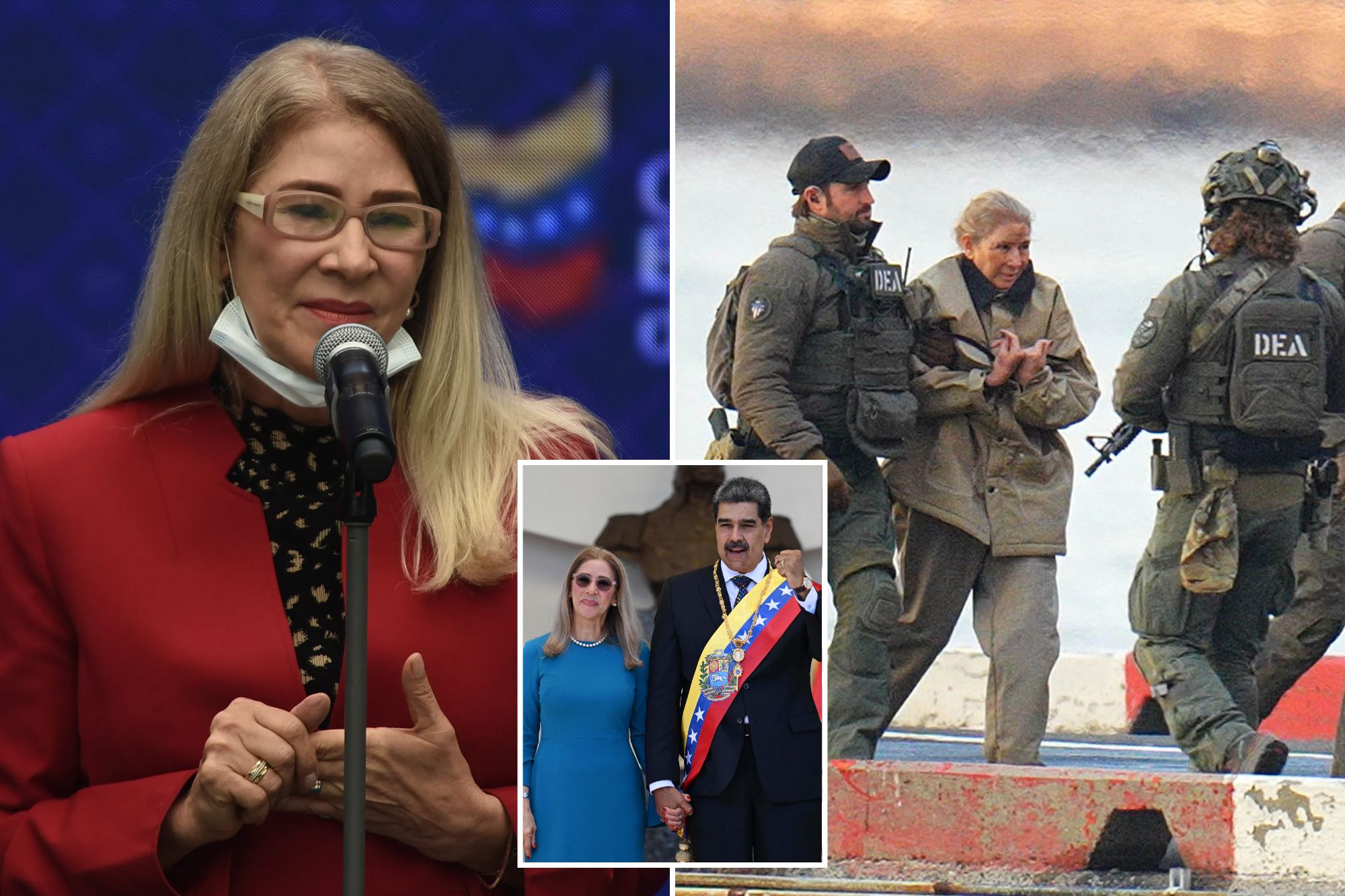
Nicolás Maduro and his wife, Cilia Flores, are now facing serious legal challenges as both have been indicted in the United States on charges related to drug trafficking and narco-terrorism. Recently apprehended in a raid in Caracas, the couple’s lives have taken a dramatic turn, with both now detained in the Metropolitan Detention Center in Brooklyn. While Maduro has been a known figure in international affairs since his rise to power in Venezuela, much less attention has been directed at Flores, whose influence within the regime has been described as significant.
Flores, 69, has been characterized by former Venezuelan intelligence officials as a pivotal player in the country’s corruption. Zair Mundaray, a former senior prosecutor in the Maduro government, noted, “Many people consider her far more astute and shrewd than Maduro himself.” This perspective highlights the complexity of her role within the regime, suggesting that her influence extends well beyond traditional first lady duties.
During the recent raid that led to her arrest, Flores reportedly sustained injuries that included a bruised eye and possible rib fracture. Her lawyer claimed these injuries were sustained during the operation, which resulted in the deaths of several members of their security detail. Following her arraignment, both Flores and Maduro pleaded not guilty to the charges, which include conspiracy to import cocaine and possession of illegal firearms.
The allegations against the couple illustrate a troubling narrative of power and corruption. The U.S. Department of Justice’s indictment suggests that they operated as a two-person cartel, with accusations of receiving substantial bribes from drug traffickers to facilitate operations within Venezuela. Mark P. Jones, a political science fellow at Rice University, emphasized that Flores benefited significantly from corrupt practices within the Maduro regime, stating, “If the indictments are correct, that would include receiving and facilitating payments from drug traffickers.”
Flores’ connection to drug trafficking is compounded by her family ties, as her nephews, dubbed “narcophews,” were previously arrested in the U.S. for their involvement in cocaine trafficking. The U.S. government alleges that they intended to use the profits from drug sales to support Flores’ political campaign for the National Assembly in 2015. The indictment indicates that their operations often took place under the protection of government-supported gangs known as “colectivos,” who were employed to secure their drug trafficking routes.
The political landscape in Venezuela has been heavily influenced by Flores’ earlier ties to the late President Hugo Chávez, with whom she shared a close relationship. Having met Maduro while serving as attorney general, Flores has been involved in Venezuelan politics for decades. However, her rise to power has been accompanied by a shift in her motivations, as noted by an anonymous source who remarked that her initial good intentions have morphed alongside her and Maduro’s consolidation of power.
As the legal proceedings unfold, the international community will be watching closely. The implications of the charges against Flores and Maduro extend beyond their personal fates, potentially reshaping the political environment in Venezuela and impacting its relations with the U.S. and other countries. With both individuals facing serious allegations, the future of their regime hangs in the balance, raising questions about the broader consequences for Venezuelan politics and governance.