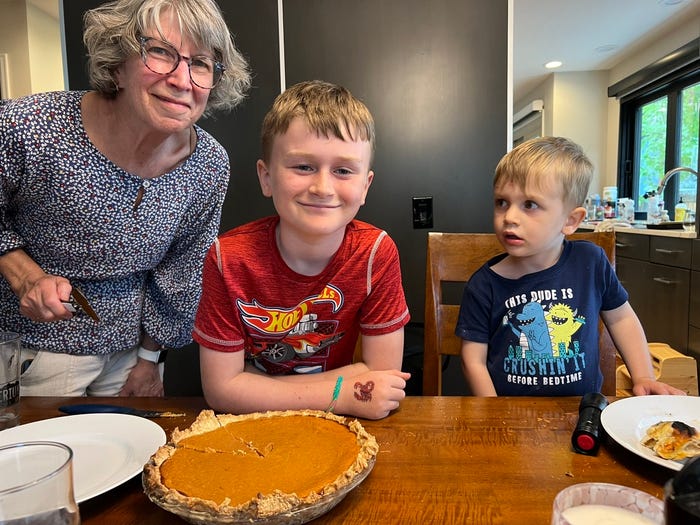
Taking care of young grandchildren can be both rewarding and exhausting. A recent experience highlighted this duality for one grandmother, who spent a week looking after her two grandsons, aged two and eight. Through the chaos, she discovered an unexpected lesson about grace and the importance of empathy in family relationships.
Unexpected Challenges and Lessons
On the fifth day of caring for her grandsons, the grandmother found herself overwhelmed. After only a few hours of sleep, she woke feeling dehydrated and fatigued. The morning began with a bathroom incident involving her youngest grandson, George. There were yellow stains on the toilet rim, and a puddle of urine created an unpleasant start to the day.
Despite the challenges, the grandmother maintained a commitment to patience. “Keep calm,” she reminded herself. “He’s only two, and at least you’re not changing poopy diapers.” The struggle to manage her frustration was palpable, especially as George insisted he could do everything himself, often slamming doors in the process.
The situation escalated when George, after a breakfast filled with energy, attempted a bathroom break that resulted in a clogged toilet. The grandmother had previously discussed toilet etiquette with him, but the chaos of the moment left her speechless. Instead of reacting with frustration, she chose silence, allowing her thoughts to simmer.
A Lesson in Empathy
During this stressful incident, George’s older brother, Stanley, stepped in. Stanley often served as a role model for George, and their close bond was evident as they shared a bedroom and even preferred to sleep side by side. Observing George on his knees with a large wad of toilet paper, Stanley offered a different perspective.
He suggested their grandmother praise George for his effort rather than scold him for the mess. “He’s a good boy,” Stanley reassured George, focusing on encouragement rather than criticism. This moment illuminated the power of kindness and support within family dynamics.
The grandmother noted how Stanley’s approach contrasted sharply with her own instinct to lecture. While she saw a disaster, Stanley recognized the effort George was putting forth. The act of opening his arms for a hug instead of pointing out mistakes highlighted the importance of unconditional love and acceptance in familial relationships.
After a day filled with activities, including playing with toys and enjoying a nap, the family decided to visit a local park. As they walked, George, who typically favored his grandfather, surprised everyone by reaching for his grandmother’s hand. This small gesture spoke volumes about their bond, illustrating how love can flourish through simple acts of kindness.
As bedtime approached, George requested that his grandmother read him five books instead of his usual choice of his grandfather. This moment of intimacy allowed her to reflect on the day’s lessons. Rather than dwelling on the challenges of managing a household with young children, she realized that the true lesson was about grace—both in parenting and in life.
The experience prompted her to consider the need for encouragement in a world often focused on perfection. “We forget what encouragement looks like,” she reflected. The grandmother recognized that love is not contingent on perfection but is instead offered amid the messiness of life.
In conclusion, the week spent caring for her grandsons provided invaluable insights into the importance of grace, empathy, and unconditional love within families. Through the eyes of her grandsons, she learned that even the smallest acts can have a profound impact, reminding us all of the power of kindness and support in nurturing relationships.