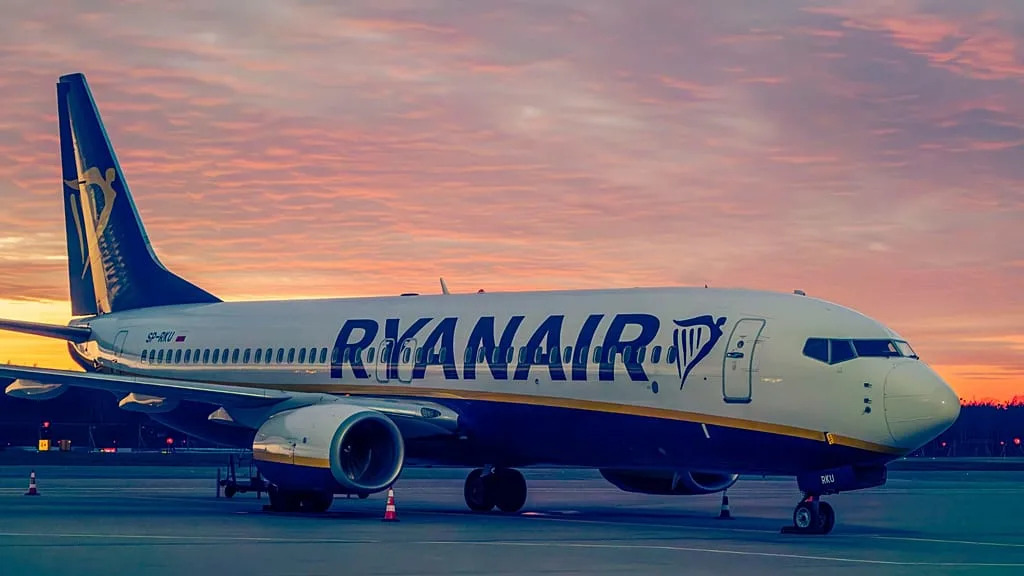
Ryanair has announced significant reductions in its route offerings for 2026, affecting several key European destinations. The budget airline’s decision will lead to the elimination of approximately three million seats, impacting travel options for passengers in countries such as Germany, Spain, France, Belgium, and Portugal. This strategic shift is part of Ryanair’s response to rising operational costs and regulatory challenges in these markets.
The airline’s CEO, Michael O’Leary, has expressed frustration over persistent delays from Boeing and criticized the management’s handling of the situation. Ryanair’s winter 2025 schedule reflected a major expansion in areas like the UK, Finland, and Italy, with new routes introduced. Nonetheless, the recent announcement of route cuts has overshadowed these expansions, as Ryanair aims to manage costs effectively.
Germany Faces Major Route Reductions
In October 2025, Ryanair disclosed plans to cut 24 routes to and from Germany, resulting in a reduction of nearly 800,000 seats for the Winter 2025/2026 schedule. Nine airports, including Hamburg, Berlin, and Cologne, will see significant service reductions, with operations suspended at Leipzig, Dresden, and Dortmund extending into 2026.
Ryanair cited high air traffic control fees, security costs, and increased aviation taxes as primary reasons for these cuts. The airline’s statement highlighted a stark contrast between Germany’s costs and those of countries like Ireland and Spain, which do not impose aviation taxes. “Germany remains among the worst recovered air traffic markets in Europe, operating at just 88 percent of pre-Covid levels,” the airline stated.
Impact on Spain and Other European Destinations
Ryanair will also cut routes to Spain, following a reduction of around one million seats in its winter 2025 schedule. For the summer 2026 schedule, the airline plans to reduce capacity by approximately 1.2 million seats, ceasing all flights to Asturias and Vigo. The airline will close its base at Santiago de Compostela and further reduce operations in Santander and Zaragoza, while flights to the Canary Islands will also be impacted.
Ongoing disputes with the Spanish airport operator Aena over increasing fees have contributed to this decision. Ryanair has argued that Aena’s pricing strategy is detrimental to smaller regional airports, making them less competitive compared to alternatives in nearby countries like Morocco and Italy.
In France, Ryanair has already cut 750,000 seats and 25 routes for the winter 2025 schedule, primarily due to elevated French airline taxes. While flights to Bergerac are set to resume in summer 2026, services to Brive and Strasbourg remain suspended, with the possibility of further cancellations looming.
Ryanair’s operations in Belgium will also see a decline, with plans to withdraw 20 routes and reduce capacity by one million seats due to a new aviation tax expected to double the cost to €10 per passenger. This reduction will affect routes to popular destinations such as Milan and Barcelona.
Additionally, the airline will discontinue all six of its routes to the Azores from the end of March 2026, impacting about 400,000 passengers annually. The cuts are attributed to rising air traffic control fees and new travel taxes in Portugal, which Ryanair claims hinder competitive pricing.
Ryanair’s moves to cut routes are also evident in Bosnia and Serbia, where the airline will reduce weekly flights from Banja Luka and Niš as it reallocates resources to growing summer demands in Croatia.
In conclusion, Ryanair’s route reductions for 2026 reflect broader challenges within the European aviation market. The airline has stated that it is willing to reconsider capacity increases if governments address the high costs associated with air travel. As Ryanair navigates these changes, the competitive landscape in Europe may shift, with rival airlines stepping in to fill the gaps left by these cuts.