U.S. President Donald Trump announced on March 16, 2024, that Venezuelan President Nicolás Maduro has been captured during a military operation in Caracas. This significant development raises questions about the future of Venezuela’s government and its leadership under Vice President Delcy Rodríguez.
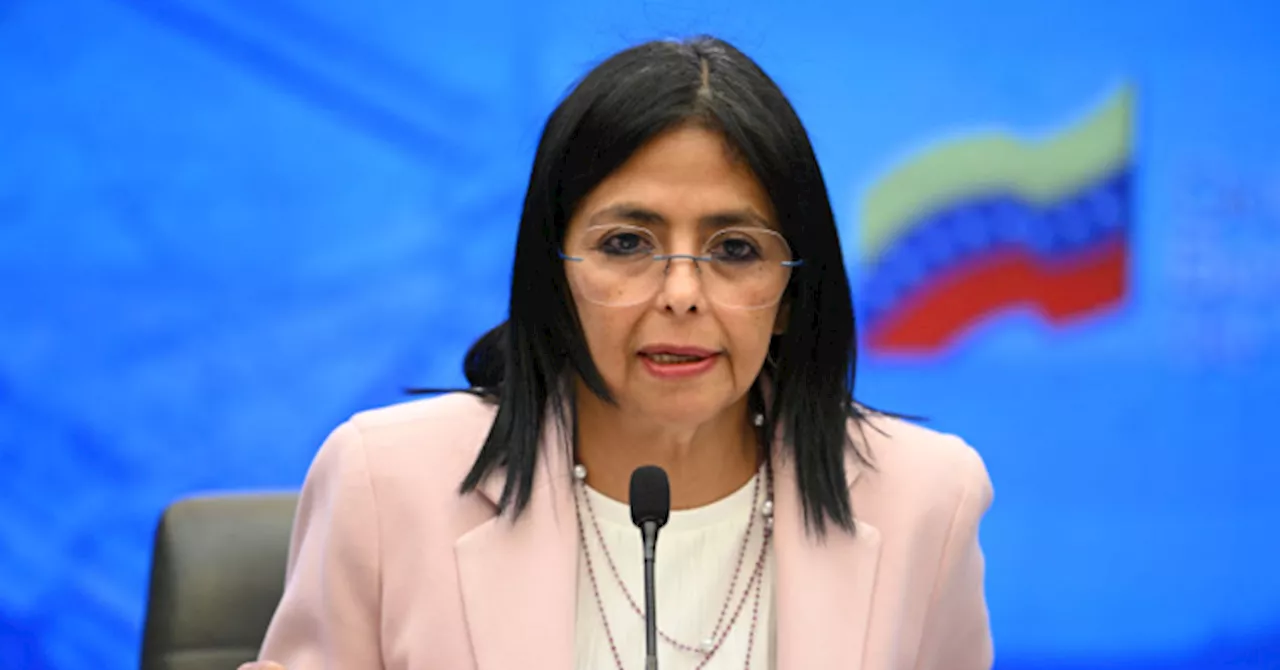
At a press conference, President Trump stated, “I understand she was just sworn in, but she was, as you know, picked by Maduro. Marco is working on that directly.” He referred to Senator Marco Rubio, who he said had recently spoken with Rodríguez. Trump indicated that she is “essentially willing to do what we think is necessary to make Venezuela great again.”
Transition of Power and Rodríguez’s Role
Rodríguez has served as Maduro’s vice president since 2018 and has held various high-ranking positions within the Maduro regime. Her recent appointment as head of Venezuela follows a turbulent political landscape marked by a series of crises and international sanctions. The Venezuelan constitution allows the president to appoint and remove vice presidents, which has led to questions about the legitimacy of her role.
During the press conference, Trump emphasized the challenges of simply withdrawing U.S. support without a clear successor: “Because for us to just leave, who’s gonna take over? I mean, there’s nobody to take over.” He acknowledged Rodríguez’s recent swearing-in while noting her connection to Maduro, stating, “She was sworn as President just a little while ago.” Trump suggested that Rodríguez expressed a willingness to cooperate with U.S. interests, saying she stated, “We’ll do whatever you need.”
International Reactions and Sanctions
The capture of Maduro has generated a complex response, both domestically and internationally. Rodríguez has publicly demanded that the U.S. government provide “proof of life” for Maduro and his wife, Cilia Flores, who were reportedly taken by U.S. forces. The Venezuelan regime’s uncertainty over Maduro’s status highlights the instability pervading the country.
In the past, the U.S. Department of the Treasury’s Office of Foreign Assets Control imposed sanctions on Rodríguez, her brother Jorge Rodríguez, and other regime officials. Similarly, the European Union has placed sanctions on her, reflecting widespread international disapproval of the Maduro regime’s actions. These measures aim to pressure the government to restore democratic processes within Venezuela.
As the situation unfolds, President Trump has indicated that the U.S. will remain involved in Venezuela’s transition, expressing confidence in U.S. oil companies to repair the country’s “badly broken” oil infrastructure. He stated, “We’re making a decision on what’s next for Venezuela. We’ll be involved in it very much.”
The international community watches closely as the U.S. navigates this new chapter in Venezuelan politics, seeking to balance diplomatic efforts with the realities on the ground. The implications of Maduro’s capture and the role of Delcy Rodríguez could reshape the future of Venezuela’s governance and its relations with foreign powers.