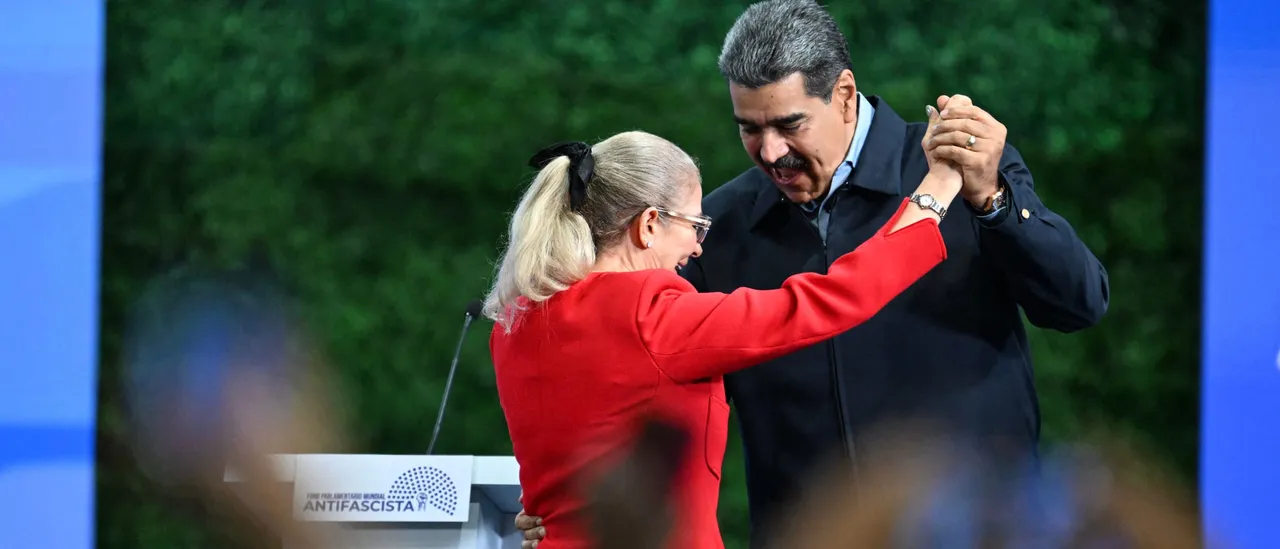
The indictment of former Venezuelan leader Nicolás Maduro and several close associates alleges their involvement in a widespread drug-fueled “culture of corruption” that has impacted the entire Latin American region. Released on March 7, 2021, the indictment from the Southern District of New York charges Maduro, his wife Cilia Flores, and his son Nicolás Maduro Guerra with multiple offenses, including narco-terrorism conspiracy. This legal action follows President Donald Trump’s announcement of Maduro’s removal from power, marking a significant development in U.S. efforts to confront corruption in Venezuela.
The 25-page indictment, signed by U.S. Attorney Jay Clayton, identifies six defendants and outlines a network enabling drug trafficking that has extended to the United States. Maduro, along with members of his regime, is accused of facilitating corruption across Latin America, notably empowering criminal organizations such as Tren de Aragua (TdA).
According to the indictment, Maduro and his regime have perpetuated a system where Venezuelan elites profit from drug trafficking while corrupt officials at all levels receive a share of the illicit gains. This patronage system is linked to the Cartel de Los Soles, an organization named for the sun insignia worn by high-ranking Venezuelan military officials. The U.S. Department of State designated the Cartel de Los Soles as a Foreign Terrorist Organization (FTO) in November 2025, highlighting the cartel’s connection to Maduro and his administration.
The indictment highlights Venezuela’s strategic position as a major transshipment point for cocaine, a situation exacerbated since Hugo Chávez assumed power in 1999. Estimates from the U.S. State Department suggest that between 200 and 250 tons of cocaine are trafficked through Venezuela annually. This environment has allowed drug trafficking to thrive, with significant portions of the profits reportedly funneled to corrupt politicians and officials who protect the drug trade.
Maduro’s regime allegedly collaborated with notorious drug trafficking organizations, including Colombian militant groups like the Revolutionary Armed Forces of Colombia (FARC) and the National Liberation Army (ELN), as well as Mexican cartels such as the Sinaloa Cartel and Los Zetas. The indictment claims that Maduro Guerra played a direct role in drug trafficking operations, reportedly attempting to ship hundreds of kilograms of cocaine from Venezuela to Miami around 2017.
The indictment illustrates how the Maduro regime has not only enriched its members but has also contributed to a wider culture of corruption that affects governance and stability in the region. It underscores the systemic issues within Venezuela, where drug trafficking has become intertwined with political power, as corrupt officials receive financial incentives to maintain their positions.
As the legal proceedings move forward, the implications of this indictment could resonate far beyond Venezuela’s borders, highlighting the challenges posed by organized crime and corruption in Latin America. The focus on high-profile figures within the Maduro regime signals a renewed commitment by U.S. authorities to address these issues and hold accountable those who exploit their positions for personal gain.