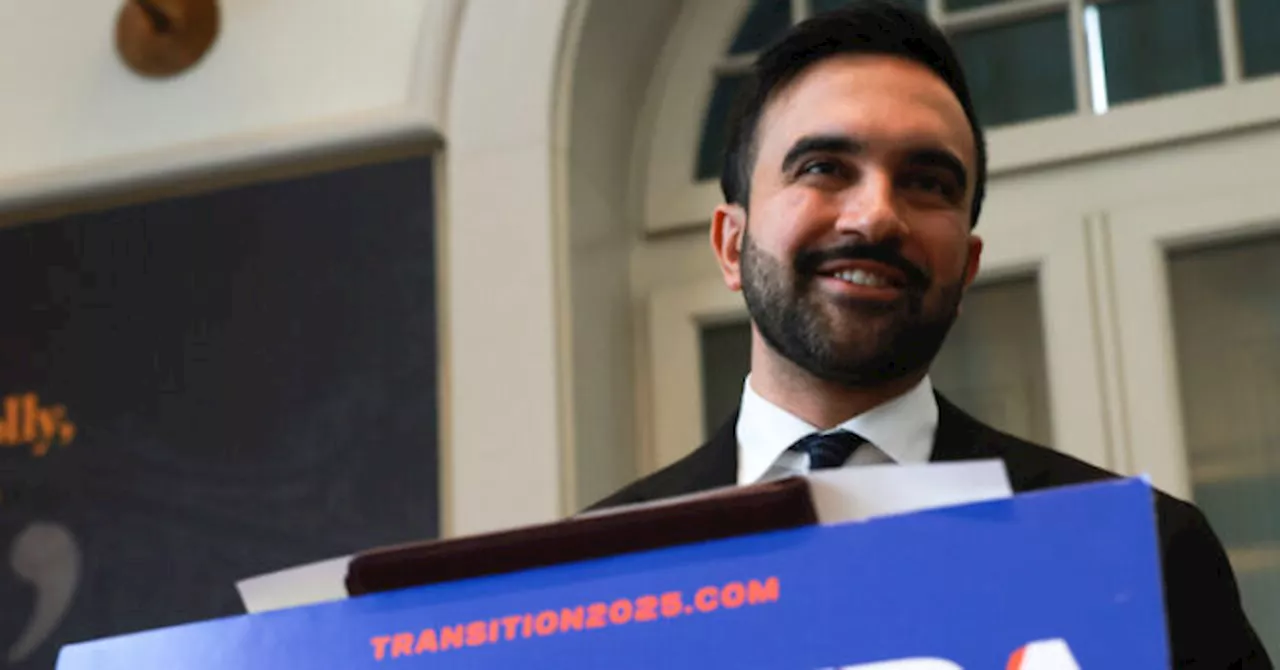
New York City has officially welcomed its new mayor, Zohran Mamdani, who took office on March 15, 2024, promising a transformative approach to governance rooted in Democratic Socialism. During his inauguration, Mamdani outlined a vision that seeks to shift the political landscape of the city towards greater government intervention and accountability to its residents.
The inauguration consisted of two key ceremonies. Mamdani first took the official oath of office at City Hall early Thursday morning, placing his left hand on a Quran. Later, he participated in a ceremonial oath administered by Senator Bernie Sanders of Vermont, emphasizing the significance of his political alignment and the support he has garnered from prominent figures in the Democratic Socialism movement.
In his inaugural address, Mamdani made it clear that his administration would prioritize the needs of all New Yorkers over the interests of wealthy individuals and corporations. He condemned the culture of complacency that he believes has plagued public service, asserting that the government must actively work to improve citizens’ lives. “The age of big government is not over,” he declared, challenging the notion that expansive government is outdated.
Mamdani’s remarks also included pointed critiques of former Governor Andrew Cuomo and Republican candidate Curtis Sliwa, reinforcing his commitment to a progressive agenda. He expressed determination to shift City Hall’s operational style away from resistance, aiming for a more proactive approach to governance. This shift signals a move towards addressing pressing issues such as income inequality, affordable housing, and public service reform with renewed vigor.
The inauguration attracted notable political figures, including Rep. Alexandria Ocasio-Cortez, who praised Mamdani’s leadership vision as a new era for New York City. She highlighted the potential for systemic changes that align with Mamdani’s far-left ideology, suggesting that his policies may invigorate a political movement focused on social justice and economic reform.
Mamdani’s commitment to his principles, despite potential labels of radicalism, suggests he will not shy away from implementing bold policies. His administration aims to challenge the status quo and actively engage in efforts to dismantle the influence of wealth in politics, a longstanding concern for many citizens disillusioned with government apathy.
As New York City embarks on this new chapter under Mamdani’s leadership, the implications of his agenda will likely spark significant debate both locally and nationally. His plans for a more equitable and progressive metropolis highlight an ambitious vision that seeks to reshape how government interacts with its citizens and addresses their needs.
The discourse surrounding Mamdani’s policies is expected to be multifaceted, with supporters eager for change and critics wary of the potential consequences of such a dramatic shift in governance. As he begins his term, all eyes will be on how Mamdani navigates the challenges ahead and implements his vision for New York City.