A team of researchers, including renowned expert Gary Chastagner, is advancing a multi-million dollar initiative to develop the ideal Christmas tree. This ambitious project, involving nine institutions across several countries, is part of a federally funded collaboration named “A GIFT SEED,” which stands for Accelerated Genetic Improvement of Fir Through Sequencing, Economics, Extension and Diagnostics.
The initiative, backed by a $7.5 million grant from the USDA National Institute of Food and Agriculture, aims to enhance the resilience of Christmas trees, making them better equipped to withstand pests, diseases, and the effects of climate change. Researchers are also investigating consumer preferences and exploring new market opportunities for tree growers.
Christmas tree farming is a significant industry in the United States. In 2022, over 14.5 million trees were harvested from approximately 16,000 farms, generating more than $553 million in revenue, according to USDA data. Oregon and North Carolina dominated production, accounting for more than half of the national total, while Washington ranked fourth, contributing around one million trees.
The project lead, Justin Whitehill, an associate professor and director of the Christmas Tree Genetics Program at North Carolina State University, highlighted that approximately 75% of sold Christmas trees are firs. If Douglas firs are included, that percentage rises to 93%. While firs are lauded for their aesthetic appeal and pleasant scent, they are not universally cultivable, a challenge the researchers aim to address.
Chastagner, who has dedicated nearly five decades to understanding Christmas trees, began his career at Washington State University in 1978. His initial research focused on combating Swiss needle cast, a disease affecting Douglas firs. Over the years, his work has contributed to the development of firs that are fuller, more durable, and resistant to various diseases and pests. Reflecting on his career, Chastagner stated, “To hear the growers talk about how it has had such a positive effect on their ability to produce high-quality trees… you can’t ask for anything more.”
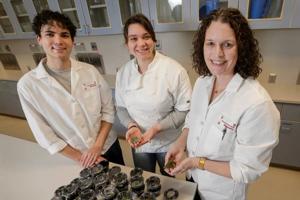
As part of the project, researchers are examining consumer preferences regarding tree aroma, a critical factor in holiday tree selection. Earlier this year, volunteers in Pullman, Washington, participated in a sensory study led by Carolyn Ross, a food sciences professor at WSU. This study, in collaboration with the University of Florida, assessed how different fir aromas influence consumer choices, comparing five varieties: Fraser, noble, Nordmann’s, Trojan, and concolor.
Initial findings suggest that the Fraser fir is the most preferred for its scent, while the noble fir received lower rankings. “There’s not one perfect something for everybody,” Ross noted, emphasizing the diversity of consumer preferences. The team aims to understand the genetics behind these aromas and how they can be enhanced through breeding.
Whitehill and Chastagner expressed enthusiasm for the project’s future, which promises to benefit both consumers and growers. They are keen on integrating aroma findings with research on the trees’ natural defenses and potential new markets. “It’s exciting to incorporate my background with aroma chemistry, biology, and genetics to tackle the major issues facing the industry,” Whitehill stated.
As the project progresses, it hopes to maintain the nostalgic and aesthetic qualities that make Christmas trees special for many families, while also ensuring that growers can adapt to changing market demands and environmental challenges. The collaborative effort represents a significant step toward understanding and improving the beloved holiday tradition.