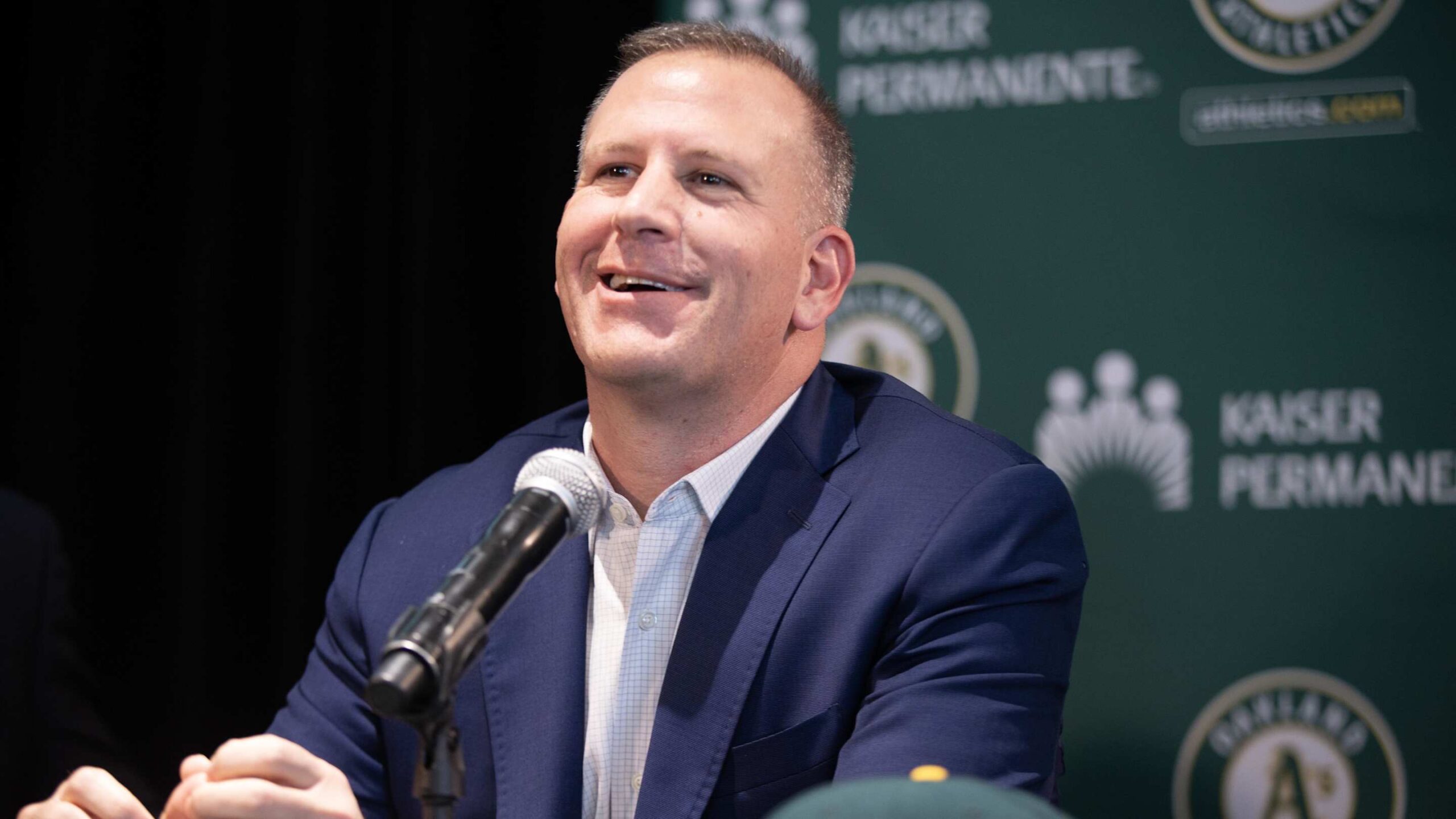
The Oakland Athletics are adjusting their offseason strategy as they prepare for the upcoming baseball season and work towards their future in Las Vegas. During a press conference on March 12, 2024, to introduce new signing Tyler Soderstrom, General Manager David Forst addressed questions regarding the team’s pursuit of free agents and the impact of relocating to Las Vegas.
Forst expressed enthusiasm about the potential of attracting players to Las Vegas, stating, “I would love to bring more guys here.” He highlighted the significance of the new ballpark currently under construction, indicating that its appeal could play a role in recruitment efforts. Forst added, “I don’t see any downsides here,” reflecting optimism about the team’s future in the city.
When asked if discussions about Las Vegas have arisen with potential free agents, Forst confirmed that they have. He noted, “We have not, as far as free agents, we haven’t talked to guys about contracts extending into here yet. But in these extension deals, we talk about the possibility of being here, and guys are excited about being in Las Vegas.” This indicates that the allure of the new location is already generating interest among players.
Despite the excitement surrounding the move, the A’s are unlikely to pursue high-profile free agents with long-term contracts, such as Framber Valdez, who may command a deal exceeding $200 million. The new stadium is expected to open in 2028, which limits the A’s front office to short-term commitments for the next couple of years. As a result, it may be challenging to attract top talent when the team can only offer a temporary playing environment.
The possibility of overpaying for players remains, as illustrated by last offseason’s signing of Luis Severino. Although the A’s secured Severino, the contract did not yield the desired results, with him posting a 4.54 ERA in 2025 and expressing dissatisfaction with the experience of pitching in Sacramento. This raises questions about whether the A’s would consider repeating such a strategy in the near future.
With many pitchers who would typically enhance the A’s rotation likely seeking longer contracts, the team may need to explore alternative options. Forst’s remarks suggest the possibility of focusing on the trade market to acquire pitchers with greater team control. This approach allows the A’s to target players without needing to discuss the specifics of their current playing conditions.
The A’s may also opt to prioritize the development of their young arms, which could provide a viable alternative to significant offseason expenditures. The 2026 season may see the emergence of promising pitching prospects such as Gage Jump, Braden Nett, and Kade Morris. If these players perform well, the A’s may not require extensive investments in free agency.
Currently, the A’s have eight starting pitchers projected to begin the season in the minor leagues, all of whom are on the 40-man roster. This depth affords the team multiple options, allowing them to evaluate which players will be integral to their future plans.
In summary, General Manager David Forst’s insights provide a glimpse into the A’s offseason expectations and the challenges they face in building a competitive roster while transitioning to a new home. The focus appears to be on balancing short-term solutions with the long-term goal of establishing a strong presence in Las Vegas.