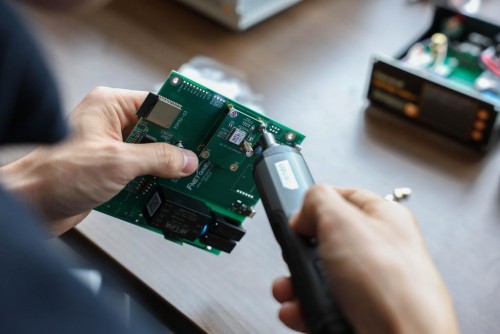
Researchers at the Department of Energy’s Oak Ridge National Laboratory (ORNL) have made significant strides in electric grid monitoring with the introduction of a new device called the Universal GridEdge Analyzer. In collaboration with the University of Tennessee, the team developed this innovative sensing device to provide real-time insights into the behavior of the power grid. The technology has garnered recognition, winning an R&D 100 Award as one of the top inventions globally.
The Universal GridEdge Analyzer stands out for its ability to record minute fluctuations in electrical voltage and current, capturing this data as waveforms. It processes an impressive 60,000 measurements per second, which is 500 times more than previous technologies. This rapid processing allows it to detect split-second reactions from power electronics that play a crucial role in the operation of today’s electric grid.
Enhancing Grid Stability
According to Yilu Liu, the lead researcher and Governor’s Chair for Power Electronics at UT-ORNL, traditional power plants differ significantly from modern setups. “Data centers and distributed energy plants with batteries use power electronics to connect to the grids. Those power electronics can switch very quickly,” Liu explained. “Their fast-acting nature can impact the stability of the entire grid, so monitoring these dynamics helps us improve future grid operations, keeping the lights on for everyone.”
This advancement builds on the existing grid frequency monitoring network known as FNET/GridEye, developed by the University of Tennessee. This network includes approximately 200 sensors across the United States and an additional 100 worldwide, collecting and transmitting aggregated data for a comprehensive overview of grid activity. The new analyzer enhances this capability by delivering more detailed information at unprecedented speeds, capturing events that prior technologies might have overlooked.
The device is designed with flexibility in mind, allowing for installation in various settings. It can be embedded within power electronics, installed on distribution lines, or even plugged into standard wall outlets. Utilities in states like Hawaii and Texas are already employing the analyzer to gain insights into how concentrations of power electronics interact with the grid.
Impact on Energy Management
For instance, at AI data centers, even minor voltage fluctuations can lead to automatic switches to backup power, requiring immediate intervention to manage energy loads effectively. The Universal GridEdge Analyzer offers operators the ability to anticipate these fluctuations, enabling them to navigate potential challenges and maintain stable operations.
Contributors from ORNL, including Bruce Warmack and Ori Wu, along with former staff members Ben LaRiviere and Lingwei Zahn, played essential roles in the development of this groundbreaking technology. The ORNL is managed by UT-Battelle for the Department of Energy’s Office of Science, which is the largest supporter of basic research in the physical sciences in the United States. The Office of Science remains committed to addressing some of the most pressing challenges in energy and technology today.
The introduction of the Universal GridEdge Analyzer marks a pivotal moment in electric grid management, offering a glimpse into a more responsive and efficient energy future. For further details on advancements in energy research, please visit energy.gov/science.