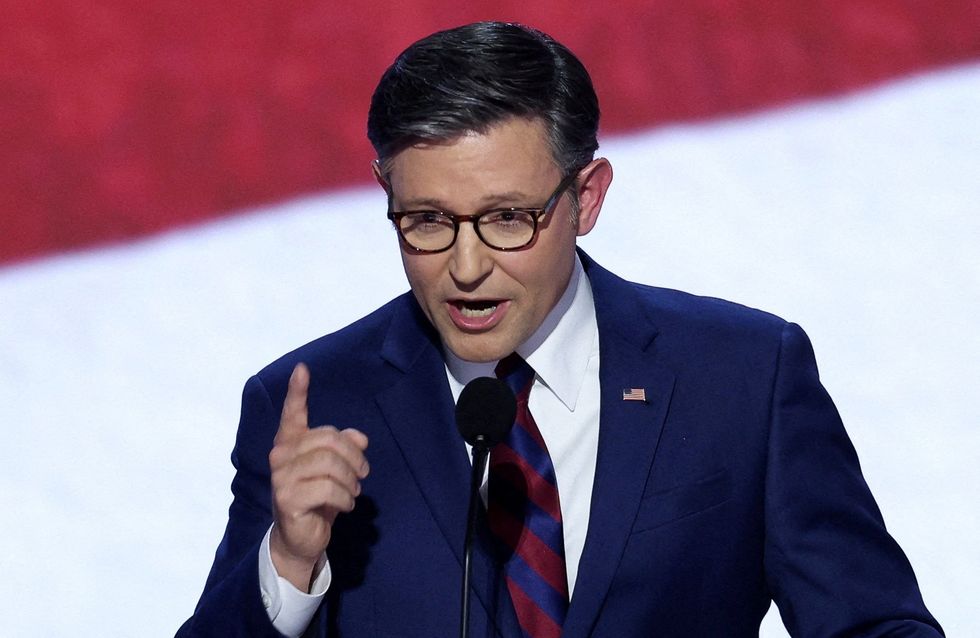
House Speaker Mike Johnson (R-LA) recently characterized the past year as a significant victory for the Republican Party, despite the ongoing challenges the party faces. In an op-ed for the Wall Street Journal, Johnson asserted that Republicans had a “great year,” even while grappling with the longest government shutdown in U.S. history and a notable shift in voter sentiment towards progressive candidates in recent elections.
Johnson criticized Democrats for their refusal to support the GOP’s proposed legislation titled the Lower Health Care Premiums for All Americans Act. He pointed out that this stance contradicts a 2017 request from 196 Democrats, including current minority leader Hakeem Jeffries, who urged President Trump to adopt similar healthcare reforms. Johnson claimed that the new bill could enhance healthcare access, reduce premiums by 11%, and save taxpayers billions.
The Speaker accused the Democratic leadership of prioritizing electoral strategy over substantive policy discussions, stating, “Today’s Democrats offer nothing new: more government, higher taxes, and costly bailouts for insurance companies—paid for, as always, by the taxpayer.” He expressed his frustration with what he views as a lack of innovative solutions from Democratic lawmakers.
In his op-ed, Johnson highlighted several Republican achievements, including the passage of 441 bills during Trump’s initial year, with particular emphasis on the Working Families Tax Cuts package, signed into law on July 4, 2024. He claimed this legislation encapsulated a significant portion of the Republican agenda and was enacted early enough in the year to deliver immediate benefits.
Despite Johnson’s enthusiasm, he did not address the need for a rebranding of the legislation from its original title, the “One Big Beautiful Bill,” due to its unpopularity. A CNN poll conducted in July revealed that approximately 60% of Americans opposed this megabill, while only about 40% supported it. Additionally, a poll cited by the Wall Street Journal indicated that 52% of respondents were against Trump’s megabill, with only 42% in favor.
Johnson also took the opportunity to tout economic improvements under Trump’s administration, noting a decline in consumer prices since March and a core inflation rate cooling to 2.7%. He projected that workers’ real wages would increase by $1,200. However, public sentiment regarding the economy appears less optimistic. The Gallup Economic Confidence Index recently registered at -33, its lowest since July 2024, indicating widespread concern about economic conditions. An AP/NORC poll found that about 70% of adults described the economy as “poor.”
The Republican Party’s outlook may also be impacted by recent polling data. A Marist poll from last month indicated that Democrats hold a 14-point lead over Republicans in the generic ballot, with 55% supporting Democratic candidates compared to 41% for Republicans. This marks the largest margin in over three years, a stark contrast to the previous year when both parties were tied at 48%.
In summary, while Johnson’s claims of a “great year” for the GOP highlight certain legislative accomplishments, they come against a backdrop of significant challenges and public skepticism regarding both policies and economic conditions.