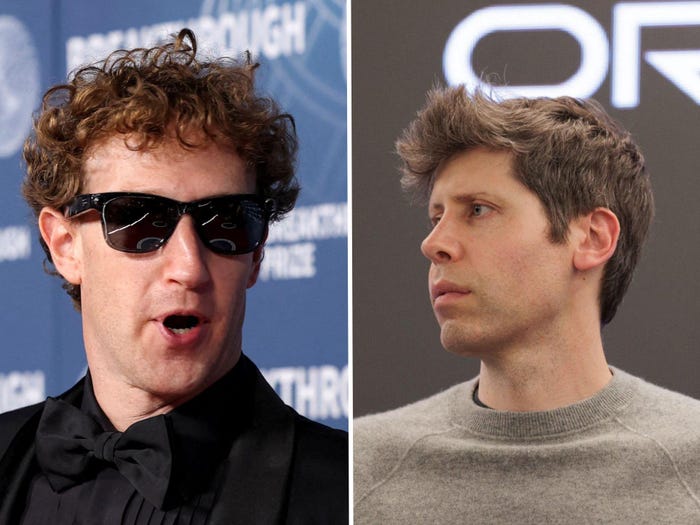
OpenAI has seen a notable turnover of talent in 2025, with at least twelve key executives and researchers departing the company. A significant portion of these individuals, including over half a dozen researchers, have transitioned to Meta’s Superintelligence Lab, which is part of a billion-dollar initiative aimed at strengthening its artificial intelligence capabilities.
This wave of departures follows a tumultuous restructuring period in 2024, during which high-profile executives, including Chief Technology Officer Mira Murati, Chief Research Officer Bob McGrew, and Vice President of Research Barret Zoph, left the organization. Following these changes, Sam Altman, the current CEO, remains one of only two original members from the company’s founding team.
Key Departures to Meta’s Superintelligence Lab
The summer of 2025 marked a turning point for OpenAI, as at least seven researchers and scientists joined Meta’s Superintelligence Lab. Among them was Jason Wei, a research scientist focused on OpenAI’s advanced models, who made the move in July. Zhiqing Sun, another research scientist, also departed for Meta around the same time.
In a notable shift, Shengjia Zhao, who co-created ChatGPT and GPT-4 at OpenAI, became the Chief Scientist at Meta’s Superintelligence Lab. Zhao is now collaborating closely with Meta’s CEO Mark Zuckerberg and Chief AI Officer Alexandr Wang. Other researchers, such as Hyung Won Chung and Jiahui Yu, have joined this new team, expressing excitement about building innovative projects with a highly skilled group.
Another significant loss for OpenAI was Hongyu Ren, who contributed to the development of the GPT-4o model before transitioning to Meta. Shuchao Bi, known for his work in multimodal and reinforcement learning, also made the switch in June.
Additional Executive Departures
Beyond the researchers moving to Meta, OpenAI experienced high-level executive exits. Larry Summers, a former Treasury Secretary and Harvard University President, resigned from the OpenAI board in November following the release of controversial email exchanges linked to Jeffrey Epstein.
In August, Julia Villagra stepped down as Chief People Officer just months after her promotion to the role in March. Liam Fedus, who served as the Vice President of Research and Post-Training, co-founded a new AI startup named Periodic Labs in September, aiming to develop an AI scientist.
Additionally, Tom Cunningham, an economic researcher and data scientist at OpenAI, resigned in November to join Model Evaluation and Threat Research, a non-profit organization that evaluates AI models’ safety and capabilities.
Just before the year’s end, Hannah Wong, the Chief Communications Officer, announced her departure, indicating she was ready for her “next chapter.” She noted that Lindsey Held Bolton would temporarily lead the communications team as the company searches for a new chief.
The departures signify a dramatic shift for OpenAI, raising questions about the long-term implications for the organization and its ongoing projects in the rapidly evolving field of artificial intelligence.