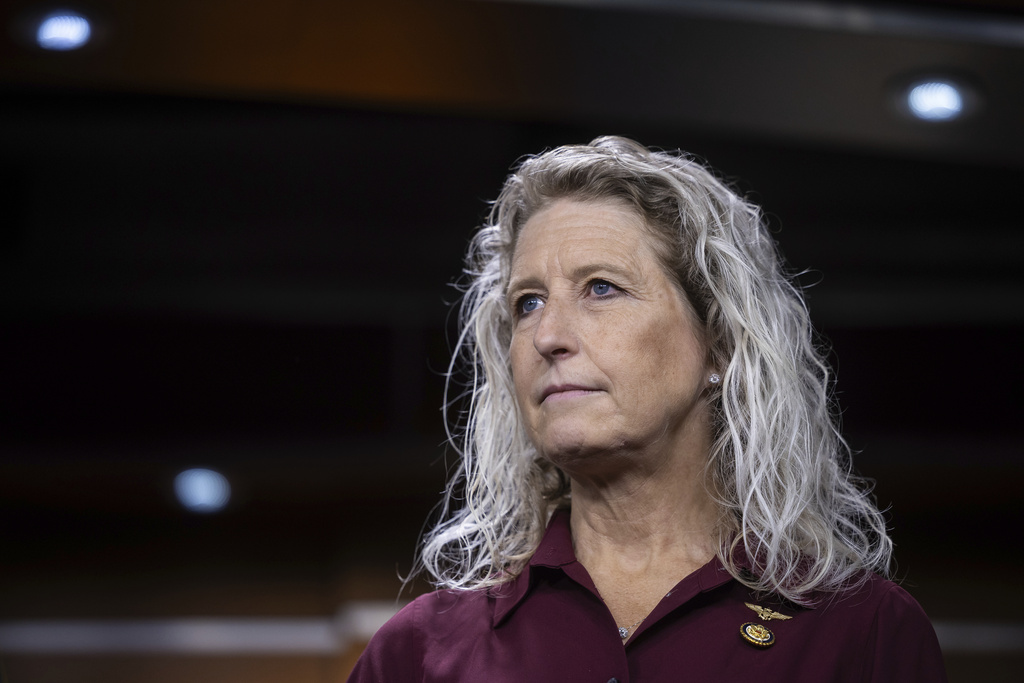
Representative Jen Kiggans of Virginia has voiced strong opposition to the Department of the Interior’s recent decision to suspend the Coastal Virginia Offshore Wind (CVOW) project, calling it “disastrous” for national security. Kiggans expressed her concerns in a statement released on March 25, 2024, emphasizing that halting the project jeopardizes energy security and military readiness.
The Department of the Interior announced that it is pausing leases for all large-scale offshore wind projects in the United States, effective immediately. This directive follows national security risks identified by the Department of Defense in classified reports. The CVOW project, which aims to install 176 turbines capable of generating 2,600 megawatts of energy, is designed to supply power to approximately 660,000 homes, schools, data centers, and military installations in the Coastal Virginia region.
Kiggans highlighted the potential economic drawbacks of this suspension, stating that it would negatively impact the local economy and thousands of workers reliant on the project. She has been actively collaborating with the Department of the Interior and Virginia Governor Glenn Youngkin to safeguard the CVOW initiative for several months. Expressing her disappointment, she remarked, “This new directive will undermine military readiness and the amount of energy that can be produced.”
Concerns over radar interference have played a central role in the Department of the Interior’s decision. Unclassified reports have indicated that large offshore wind turbines can create radar “clutter,” which obscures legitimate moving targets and leads to false target generation in the vicinity of these installations. Kiggans underscored that the Naval Air Station Oceana, the U.S. Navy’s East Coast master jet base, urgently requires a comprehensive power grid upgrade linked to the CVOW project, which is now on hold due to this suspension.
Secretary of the Interior Doug Burgum defended the decision, stating, “The prime duty of the United States government is to protect the American people. Today’s action addresses emerging national security risks, including the rapid evolution of relevant adversary technologies.” He emphasized that the government must balance energy development with national security concerns.
Looking ahead, the Department of the Interior indicated that this pause allows time for collaboration between government agencies and leaseholders to assess and potentially mitigate the identified national security risks. Kiggans has vowed to continue her efforts to ensure the completion of Virginia’s offshore wind project, noting that ratepayers have already invested in its development.
As discussions continue, the impact of this suspension on both the local economy and national security will be closely monitored. The future of the CVOW project remains uncertain as stakeholders await further clarification from the administration.