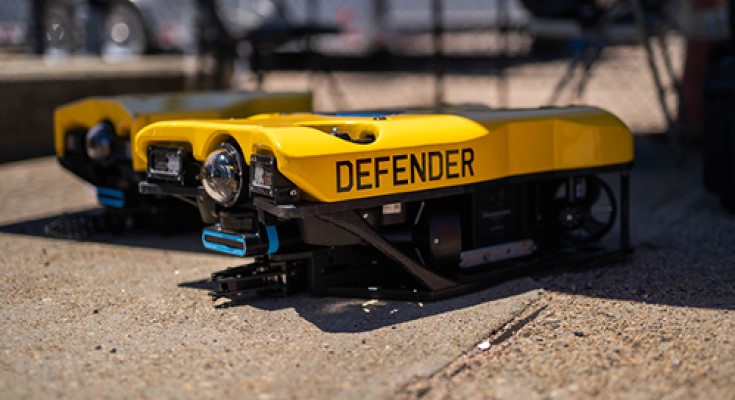
AeroVironment, Inc. has secured a significant contract worth $4.8 million from the United States Coast Guard to deliver cutting-edge remotely operated underwater vehicles. This agreement is part of the Coast Guard’s ongoing initiative to modernize its maritime operations through the adoption of autonomous technology.
The contract, awarded through AeroVironment’s subsidiary VideoRay, focuses on the deployment of the Mission Specialist Defender vehicles. This move aligns with the Coast Guard’s Force Design 2028 initiative, which aims to enhance the service’s operational capabilities and readiness through the integration of robotics and autonomous systems.
Enhancing Maritime Operations
The Defender is engineered to facilitate a broad spectrum of missions, ranging from underwater and pier inspections to hull assessments and subsurface infrastructure surveys. Additionally, it will play a vital role in disaster response and search-and-rescue operations. By utilizing these systems, the Coast Guard aims to minimize risks associated with human divers while increasing its operational reach in challenging environments.
Chris Gibson, chief executive officer of VideoRay, emphasized that this contract underscores the company’s reputation as a trusted provider of essential maritime robotics. He noted that the Defender complements AeroVironment’s comprehensive strategy for uncrewed systems and addresses the growing need for reliable autonomous tools in defense and security operations.
This contract represents the most substantial award within a broader allocation of $11 million designated for rapid autonomous fleet upgrades in fiscal year 2025. The Coast Guard has also established a dedicated Robotics and Autonomous Systems Program Executive Office, which will focus on integrating unmanned technologies across its operational framework.
Advancing Capability and Safety
According to Anthony Antognoli, the Coast Guard’s first executive officer for robotics and autonomous systems, the implementation of unmanned platforms significantly enhances domain awareness while mitigating risks in hazardous settings. He remarked that these technologies enable the Coast Guard to respond more swiftly, operate with greater efficiency, and expand its operational reach to address increasingly complex mission demands.
The Mission Specialist Defender is built on a modular, open-architecture platform, allowing operators to adapt and integrate various sensors, manipulators, and specialized payloads as mission requirements evolve. Its field-swappable components are designed for on-site maintenance and rapid repairs, ensuring that operational tempo can be maintained without prolonged downtime.
For AeroVironment, this contract further strengthens its expanding defense portfolio, which includes collaborations with U.S. and allied forces, notably within the Navy’s Maritime Expeditionary Standoff Response program. As the Coast Guard continues to incorporate autonomous systems into its daily operations, this contract marks a critical step in preparing the force for the demands of the contemporary maritime domain.