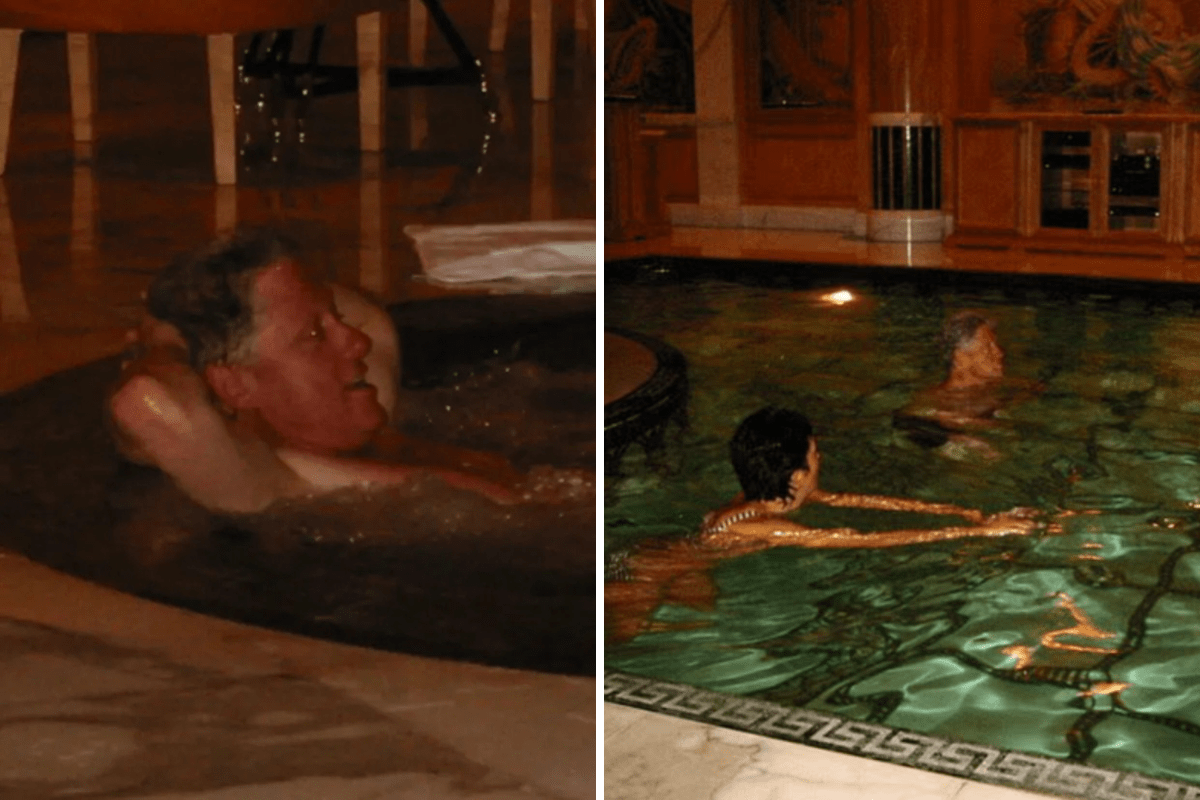
The recent release of documents and photographs from the U.S. Justice Department regarding convicted sex offender Jeffrey Epstein has sparked renewed scrutiny of high-profile individuals, notably former President Bill Clinton. Clinton’s spokesperson accused former President Donald Trump of attempting to deflect attention from his own connections to Epstein by scapegoating Clinton.
On March 15, 2024, the Justice Department published a significant volume of files as part of the Epstein Files Transparency Act, which mandates the public disclosure of records related to the Epstein investigation. Among the materials were several photographs of Clinton, including notable images of him at a swimming pool with Epstein, his long-time associate Ghislaine Maxwell, and a woman whose identity has been redacted.
While the release included numerous photographs—over a dozen featuring Clinton—the documents lacked contextual information, such as dates or background details, and did not explicitly link Clinton or other individuals to any criminal conduct.
Clinton’s chief of staff, Angel Ureña, issued a statement responding to the controversy surrounding the release. “This is not about Bill Clinton,” Ureña emphasized, adding that even White House chief of staff Susie Wiles acknowledged that Trump was incorrect in his accusations against Clinton. He urged the public to demand accountability rather than scapegoats, stating, “Everyone, especially MAGA, expects answers, not scapegoats.”
The Justice Department noted in their findings that there was no evidence to warrant further investigations into uncharged public figures, including Clinton. The department also highlighted the extensive use of redactions in the released documents to prioritize victim privacy. Despite this clarification, the visibility of Clinton in the photographs has drawn considerable public and media attention.
In contrast, Trump was featured in only a few images from the initial release, prompting criticism from various lawmakers, including some who previously supported Trump, such as Marjorie Taylor Greene. Greene criticized the release for being incomplete and accused the Justice Department of excessive redaction, while officials have indicated that additional documents may be disclosed as their review continues.
Ureña further elaborated on the situation, stating, “The White House has not been hiding these files for months, only to dump them late on a Friday afternoon to protect Bill Clinton. This is about shielding themselves from what comes next.” He maintained that no amount of delayed accountability from those with ongoing ties to Epstein could alter the facts about Clinton’s past actions.
In a related statement, White House spokeswoman Abigail Jackson asserted that the Trump administration has been more forthcoming than previous administrations regarding Epstein’s connections, suggesting that their cooperation with congressional inquiries demonstrates a commitment to transparency. Jackson claimed that Trump had done more for the victims of Epstein than any Democrats.
Wiles, in a separate commentary to Vanity Fair, asserted that there was no evidence to support claims that Clinton repeatedly visited Epstein’s private island. She added that while Trump was included in the released files, he was not depicted in any compromising situations.
As calls mount from both Congress and advocates for survivors of Epstein’s crimes, the Justice Department faces increasing pressure to release a less redacted version of the Epstein files. The unfolding situation continues to provoke debate regarding accountability and transparency among prominent figures linked to Epstein’s illicit activities.