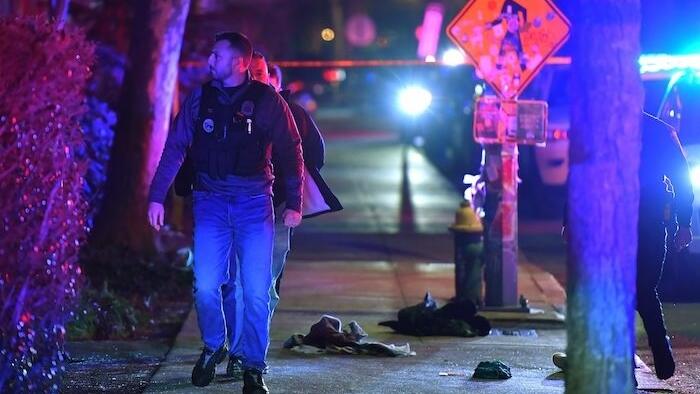
A significant controversy has erupted surrounding Brown University in Providence, Rhode Island, following a mass shooting that occurred on December 16, 2025. Criticism has mounted regarding allegations that the university disabled security cameras, resulting in blind spots that may have hindered the investigation into the shooter, identified as Claudio Neves Valente, a 48-year-old Portuguese national found deceased shortly after the incident.
During a press conference, Greg Price, a conservative commentator, shared a video capturing a tense moment when a Latino radio host confronted law enforcement officials about the alleged removal of security cameras. The journalist claimed that Brown’s actions were intended to align with sanctuary city laws, which aim to protect undocumented individuals from being recorded. This confrontation led to the abrupt termination of the press conference, raising further suspicions among critics.
The scrutiny intensified when it was revealed that Brown University operates over 1,200 security cameras on campus. Yet, Peter Neronha, the Rhode Island Attorney General, stated that no footage of the shooting was available because it took place in an “old part” of the Barus & Holley engineering building, which was constructed in 1965. Price highlighted this inconsistency, questioning how a university with an endowment of $8 billion could lack adequate surveillance in a significant academic facility.
Adding to the confusion, social media users pointed out that the shooter passed directly by a campus police vehicle after the attack, yet investigators could not obtain any footage because the patrol cars do not have dash cameras. Col. Oscar Perez, the Providence Police Chief, acknowledged during a briefing that he was uncertain whether the university’s police vehicles were equipped with dash cameras, leaving a gap in crucial evidence.
The situation became even more complicated when it was disclosed that Brown University had received a letter in August 2025 from over 30 human rights and digital privacy organizations. This coalition, led by Fight for the Future, urged the university to disable its CCTV systems to protect undocumented students and protesters from potential repercussions under federal immigration enforcement. Critics are now suggesting that Brown capitulated to these demands, inadvertently creating the surveillance blind spots that have hampered the investigation into the shooting.
As the investigation continues, authorities are still searching for older footage that may provide insight into Neves Valente’s movements prior to the shooting. While Brown officials maintain that the engineering building lacked cameras due to its age, it has been noted that the university’s president resides in a much older residence equipped with contemporary security systems. The contrast raises further questions about the institution’s commitment to campus safety and its handling of security measures.
The unfolding events at Brown University demonstrate the complex interplay between security, privacy, and public safety in educational institutions. As the investigation progresses, it remains to be seen how these allegations will impact the university’s reputation and policies moving forward.