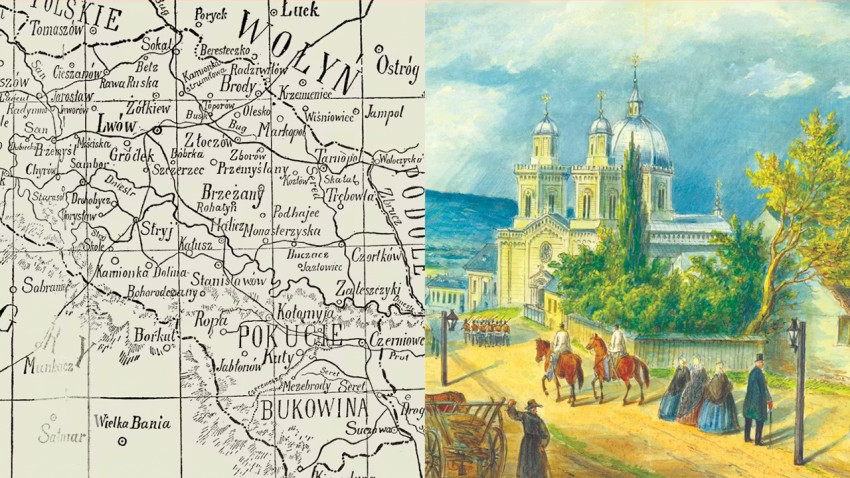
Historian Cristina Florea sheds light on the rich and tumultuous history of Bukovina in her newly published book, “Bukovina: The Life and Death of an East European Borderland.” The region, now divided between Romania and Ukraine, has a unique cultural and historical identity that many may not recognize on a map but is deeply embedded in the memories of local residents.
Florea, an assistant professor of history in the College of Arts and Sciences, emphasizes that while Bukovina may not exist as a distinct political entity today, its legacy continues to resonate. “Mention the name ‘Bukovina’ to a Romanian or a Ukrainian and you will almost always get a sigh and a smile,” she noted. The region is often celebrated for its stunning landscapes and rich past, creating a sense of nostalgia that captivates those familiar with its history.
Historical Context and Transformation
Historically, Bukovina finds its roots as a distinct region in the late 18th century after the Habsburg Empire annexed it following a Russo-Turkish war. The borderland existed until World War II, when it was split between Romania and Soviet Ukraine. Today, it straddles the line between the European Union and non-EU Europe, offering a unique perspective on the historical shifts that have shaped modern Europe.
The region is particularly noted in literary circles, being the birthplace of Paul Celan, considered one of the greatest German-language poets of the 20th century, and featured in the works of Gregor von Rezzori. Their writings reflect the multicultural tapestry of Bukovina, which was once home to a vibrant Jewish population. This community lived through the horrors of the Holocaust, with many descendants now scattered around the world, contributing to a significant body of memoirs that document life during the interwar years and World War II.
Florea’s research highlights how Bukovina’s diverse cultural heritage was altered by successive regimes. After the Holocaust, the region was reclaimed by Romania, which initiated a campaign of Romanianization that led to the destruction and displacement of its Jewish residents.
Cultural Dynamics and Urban-Rural Tensions
Florea’s book delves into the contrasting experiences of urban and rural residents, especially in the city of Czernowitz. Initially envisioned as an urban history, the research revealed that the city’s story is intertwined with that of the surrounding countryside. The relationship between urban and rural populations often influenced the nature of conflicts characterized as ethnic, with antisemitism shaped by these dynamics.
“What never ceases to amaze me about Bukovina is how much history is packed into such a short span of time,” Florea explained. The region exemplifies a microcosm of Europe, where individuals could be born under one regime, grow up under another, and ultimately die as citizens of a completely different state. This rapid succession of governance and cultural changes allowed Bukovina to reflect broader European historical processes in a condensed format.
Florea argues that Bukovina’s history is not just a tale of nostalgia but a critical lens through which to view contemporary issues. Today, it finds itself at the crossroads of geopolitical realignment, serving as a refuge for those fleeing conflict in eastern Ukraine. The region continues to be shaped by the legacy of the Soviet Union, illustrating that its story is far from over.
The compelling narrative Florea provides in her book serves as a reminder of the complexities of identity, belonging, and history in a region that has weathered significant transformations. Her insights encourage a deeper understanding of Bukovina and its place in the broader European context, offering lessons that continue to resonate in today’s world.