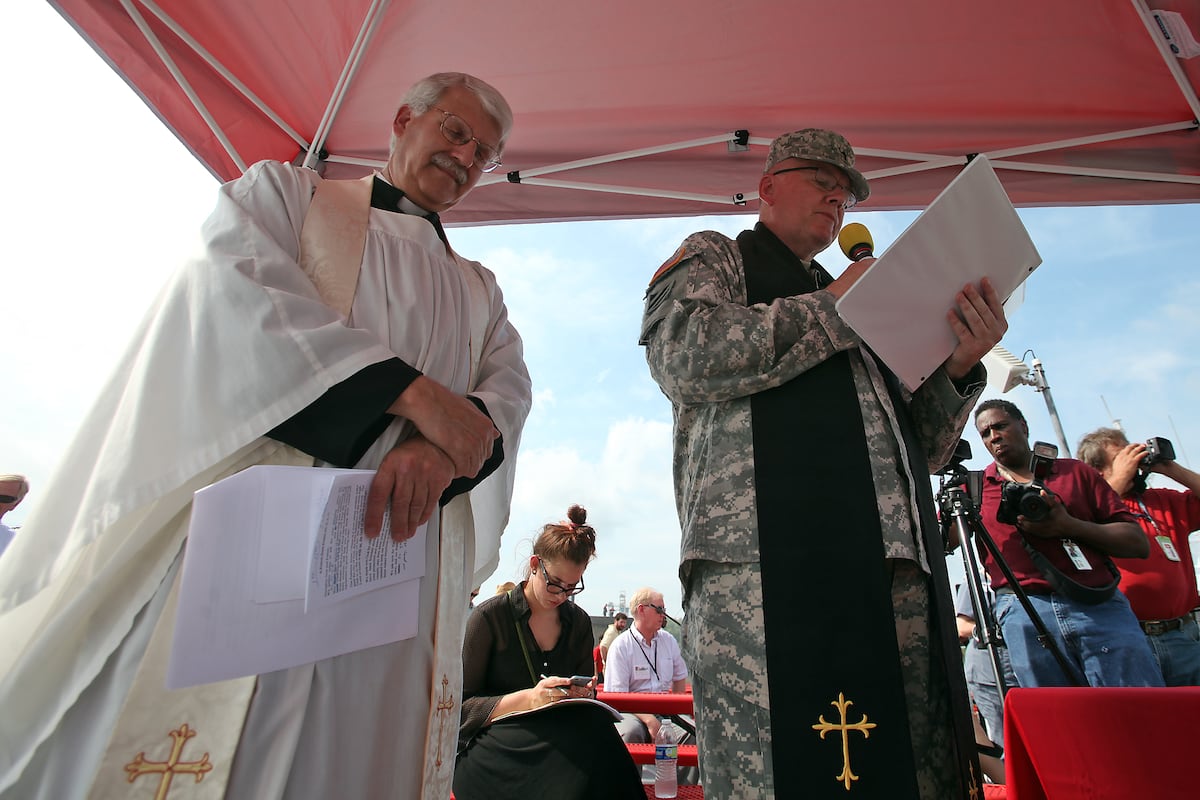
Defense Secretary Pete Hegseth has announced a significant overhaul of the U.S. military’s Chaplain Corps, aiming to refocus its mission on religious ministry. In a video message released on Tuesday, Hegseth expressed his intention to “make the Chaplain Corps great again,” emphasizing a return to traditional spiritual leadership amid concerns about political correctness and secular influences within the military.
Hegseth criticized what he termed “new age notions” found in the Army Spiritual Fitness Guide, which was introduced in August 2025. He pointed out that the guide mentions God only once while referencing feelings eleven times and even includes the concept of playfulness nine times. “This guide alienates religious soldiers by pushing secular humanism,” he stated, suggesting that chaplains have increasingly been perceived as therapists rather than as spiritual ministers.
In response to these observations, Hegseth confirmed that the Army would be “tossing” the current guide, announcing that he would sign a directive to discontinue it immediately. The guide has faced scrutiny since its release, having been developed through an extensive study by the III Corps, according to previous reporting by Military Times. An Army spokesperson, Tony McCormick, reaffirmed Hegseth’s commitment, stating, “We are aggressively moving forward with Secretary Hegseth’s intent to discontinue the Army Spiritual Fitness Guide.”
Plans for Reform and Simplification
Alongside the discontinuation of the guide, Hegseth outlined additional reforms aimed at simplifying the military’s approach to spiritual support. He noted that the faith and belief coding system has become overly complex, with over two hundred different codes. Simplifying this system is part of a broader strategy to ensure spiritual wellbeing is prioritized similarly to mental and physical health.
“There will be a top-down cultural shift,” Hegseth declared, emphasizing the importance of establishing a supportive environment for service members that acknowledges their spiritual needs. He indicated that further revisions to the Chaplain Corps would be forthcoming, although specific details about their implementation remain unspecified.
As questions arose concerning whether Hegseth’s video constituted formal policy changes and how it would affect the roles of military chaplains, the Pentagon’s press duty officer stated on Wednesday that there would be no additional comments beyond what was presented in the video.
The Secretary’s directive marks a notable shift in how spiritual care is perceived within the military’s operational framework. As discussions about the role of chaplains evolve, the impact of these changes on service members and their spiritual support remains to be seen.