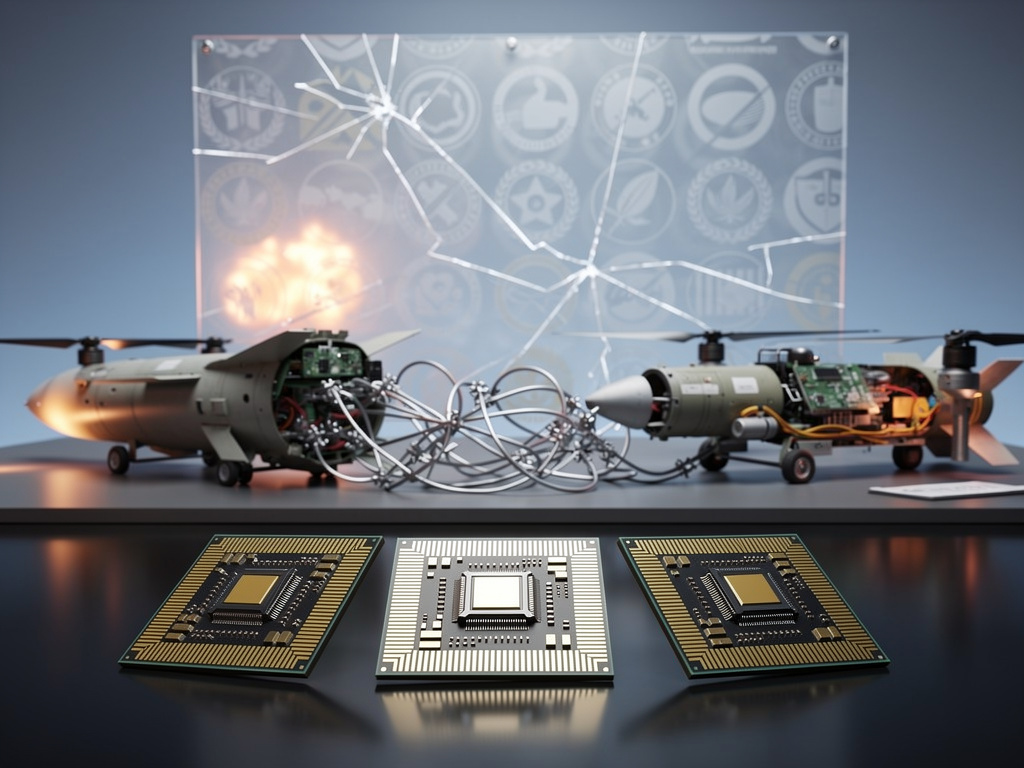
UPDATE: Intel Corp., Advanced Micro Devices Inc. (AMD), and Texas Instruments Inc. are facing urgent legal challenges, accused of enabling Russian missile strikes on Ukrainian civilians by supplying critical semiconductor technology. The lawsuits, filed on behalf of numerous victims, reveal how these tech giants allegedly failed to prevent their chips from being used in deadly attacks, raising questions about corporate responsibility amid strict U.S. sanctions.
The legal actions highlight a shocking oversight by these companies, with accusations of “willful ignorance” regarding third-party resellers. Prominent attorney Mikal Watts and the law firm Baker & Hostetler are leading the charge in this high-stakes litigation, aiming for accountability as the world watches closely.
Between 2023 and 2025, incidents involving Iranian-made drones and Russian KH-101 cruise missiles have reportedly included technology from Intel and AMD. The implications are dire: these companies are accused of allowing their components to end up in weaponry that has caused immense human suffering in Ukraine, including a tragic missile strike in Kyiv that killed 15 people.
Despite U.S. regulations prohibiting exports to Russia without licenses, the lawsuits contend that these companies did not sufficiently vet their distribution networks. Investigations reveal that intermediary countries like Turkey and Hong Kong have become conduits for circumventing restrictions, fueling a flow of semiconductors into Russia.
Industry experts assert that the complexity of global supply chains complicates enforcement of these laws. U.S. authorities rely on companies’ internal compliance programs, which critics argue have proven inadequate. The lawsuits demand not only financial compensation for victims but also systemic changes to ensure better tracking of semiconductor distribution.
Public scrutiny has intensified, with social media amplifying calls for accountability. Posts on X (formerly Twitter) have documented ongoing concerns about chip flows to Russia, reflecting a growing frustration with corporate oversight. The narrative is further complicated by a recent Bloomberg report that highlights significant drops in official imports to Russia, countered by a surge in unmonitored channels.
Intel and AMD have publicly denied any wrongdoing, asserting their commitment to compliance with sanctions. However, critics argue that their responses lack depth. These lawsuits are poised to have financial repercussions, with stock prices for both companies already dipping in reaction to the news.
The geopolitical ramifications are significant. Ukraine has long urged stricter enforcement of sanctions, with officials like Inna Sovsun emphasizing the role of Western technology in Russian aggression. As pressures mount, the potential for tighter export controls could extend to emerging technologies, including AI chips.
Amid these developments, the legal landscape is evolving. The lawsuits invoke the Alien Tort Statute, allowing foreign nationals to sue U.S. companies for their roles in human rights abuses. This could set a precedent that reshapes the corporate landscape, holding tech giants accountable for their involvement in global conflicts.
As these cases unfold, both Intel and AMD are reportedly enhancing their compliance measures, with Intel expanding audits and AMD investing in AI-driven monitoring systems. The stakes are incredibly high, as failure to adequately address these issues could result in severe penalties and reputational damage.
The human cost of these allegations cannot be understated. Victims’ stories illustrate the devastating impact of missile strikes powered by these technologies, pushing for a re-evaluation of corporate ethics in the tech industry. The lawsuits may serve as a wake-up call, urging companies to prioritize accountability over profits.
Looking ahead, resolutions may involve settlements to aid in Ukrainian reconstruction efforts, but systemic changes are crucial. The tech industry must adapt to ensure that innovations intended to advance humanity do not inadvertently contribute to destruction.
As the situation develops, the world is watching closely. The unfolding legal battles not only challenge the tech giants’ reputations but also compel a broader discussion on the intersection of technology and international security. The outcome will undoubtedly influence how companies navigate the complexities of global commerce in the face of ongoing geopolitical tensions.