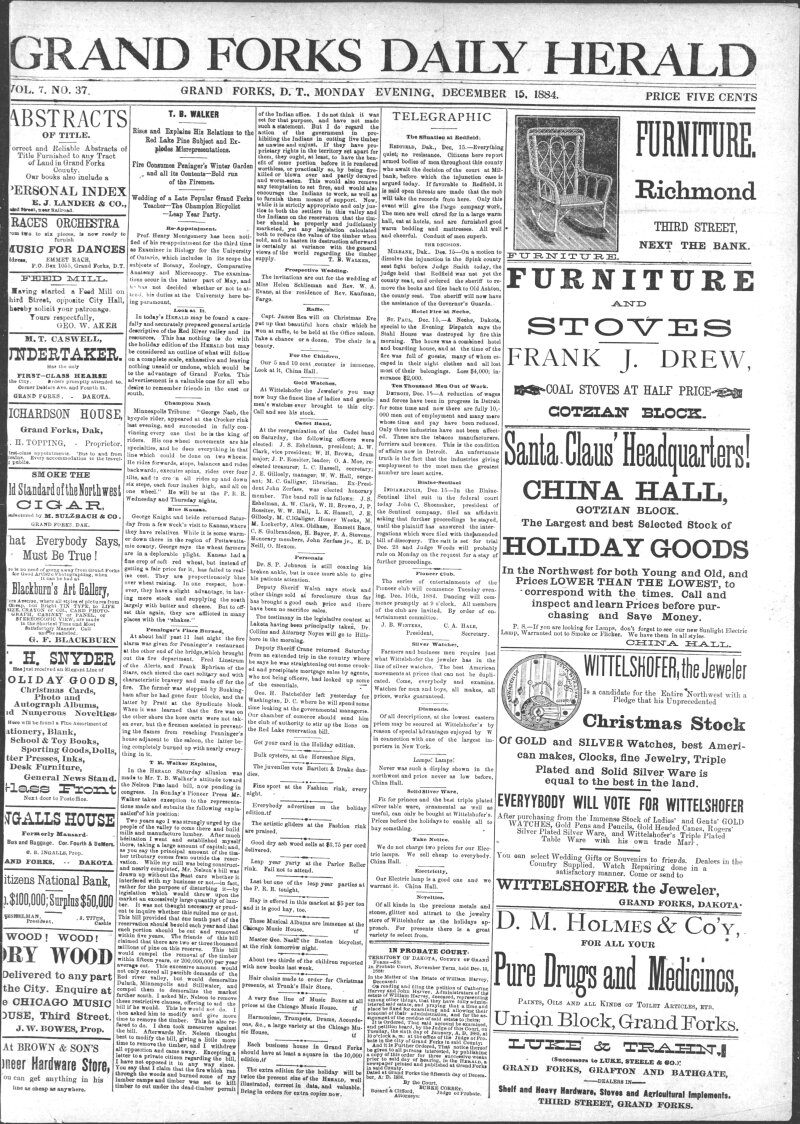
On December 15, 1884, the Grand Forks Herald highlighted the rapid growth of Grand Forks, North Dakota, a city that had recently reached a population of approximately 5,000. The article described the area as a thriving manufacturing center, bolstered by abundant local timber and improved railway access. The city’s development was driven by significant investments, including a new $250,000 roller mill, which was set to enhance local production capabilities.
Manufacturing and Economic Growth
The article proudly announced the construction of a roller mill by W. H. Merritt and the Item Company, projected to grind 2,000 barrels of flour daily. This facility was expected to operate year-round, reflecting the city’s ambition to establish itself as a leading manufacturing hub. With the completion of the Canadian Pacific Railway and the Dakota Central Railway anticipated in the coming years, Grand Forks was positioned to compete with other towns in the region.
In addition to the roller mill, the city boasted a variety of manufacturing enterprises, including breweries, flour mills, and foundries. Notably, Grand Forks was home to a large steam brewery, which provided a local market for barley, a crop well-suited to the region’s fertile soil. The article emphasized the vast timber resources available, particularly the high-quality white pine and hardwoods found along the Red River, which were crucial for various manufacturing processes.
Education and Community Development
As the city expanded, so did its commitment to education. The article announced the progress of the University of North Dakota, with its main building under construction and scheduled for completion in the spring of the following year. The university aimed to offer a high standard of education, with an experienced faculty led by Dr. W. T. Montgomery, the appointed president. This commitment to education was complemented by a robust public school system, promoting academic excellence and attracting families to the area.
The article also highlighted the liberal homestead laws in place, which encouraged settlement and development. With low taxes and a commitment to improving infrastructure, Grand Forks was appealing to prospective residents and businesses alike. The agricultural potential of the surrounding land was significant, with farmers able to cultivate high-quality grains at low costs, further enhancing the city’s economic prospects.
Community life in Grand Forks was enriched by a diverse array of churches, including Methodist, Baptist, and Catholic congregations, which fostered a strong moral and social fabric. The article noted that the city was not only focused on economic development but also on creating a vibrant community with cultural and social opportunities.
The climate of the region was frequently praised as a major draw for newcomers. Described as “mild, pleasant, and healthy,” the atmosphere in Grand Forks was seen as conducive to a high quality of life, making it an attractive destination for families and workers looking to settle in a burgeoning area.
In summary, the December 15, 1884 edition of the Grand Forks Herald painted a picture of a city on the rise, characterized by economic ambition, educational advancement, and a welcoming community spirit. As Grand Forks positioned itself as a manufacturing center in the Dakota Territory, it laid the groundwork for continued growth and development in the years to come.