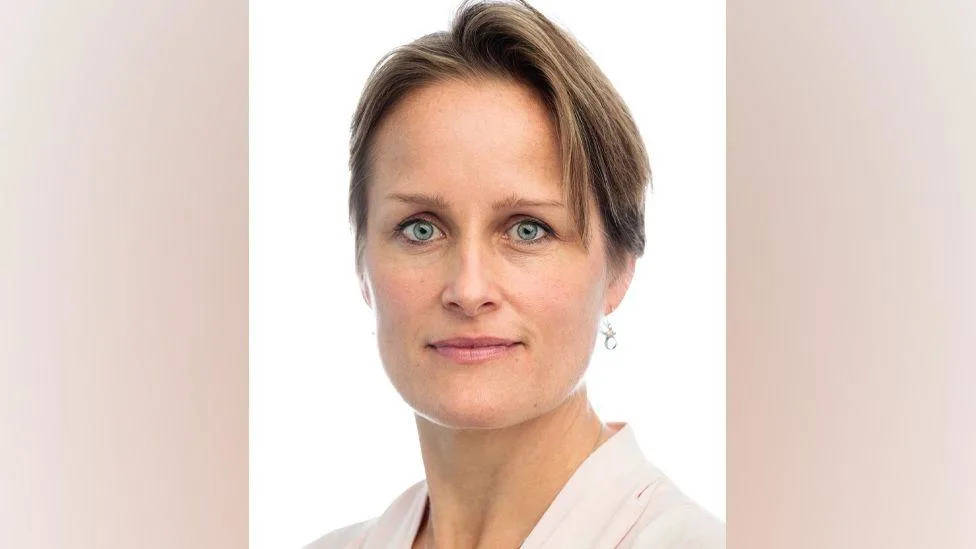
The new head of MI6, Blaise Metreweli, will deliver a significant warning regarding the acute threat posed by Russia during her inaugural public address today. In her speech, she plans to address the dangers of hybrid warfare, which encompasses cyber attacks and drone incidents linked to Russian proxies targeting critical infrastructure. Ms. Metreweli will label this situation as “an acute threat posed by an aggressive, expansionist and revisionist Russia.”
She will emphasize the United Kingdom’s commitment to maintaining pressure on Russian President Vladimir Putin in relation to the ongoing conflict in Ukraine. Since taking over the leadership of the Secret Intelligence Service on October 1, 2023, Ms. Metreweli has made history as the first woman to lead Britain’s overseas intelligence agency, succeeding Sir Richard Moore.
In her remarks, Ms. Metreweli will reference the recent sanctions imposed on Russian entities accused of engaging in information warfare. Additionally, she will highlight the sanctions against two companies based in China for their indiscriminate cyber activities targeting the UK and its allies. While Western sanctions have notably impacted Russia’s economy by redirecting its exports towards nations like China and India, they have not deterred President Putin’s resolve to continue military operations in Ukraine.
Technological Focus in Espionage
Ms. Metreweli’s speech will also underscore her commitment to integrating technology into intelligence operations. Having joined MI6 in 1999, she has risen through the ranks, particularly in the agency’s Q Branch—responsible for developing cutting-edge gadgets for covert operations. She is expected to urge her intelligence officers to become proficient in technology, stating, “We must be as comfortable with lines of [computer] code as we are with human sources, as fluent in Python as we are in multiple languages.”
Python, a widely used programming language for over three decades, exemplifies the evolving nature of espionage, where reliance on traditional methods is increasingly challenged by advancements in biometric technology that can expose agents within seconds.
Elsewhere, Sir Richard Knighton, Chief of the Defence Staff, will address the Royal United Services Institute in London, advocating for a “whole of society approach” to national resilience in the face of mounting threats. His speech is expected to highlight the necessity for a collective effort in strengthening the United Kingdom’s defense capabilities, extending beyond military forces to include contributions from universities, industries, and public services.
Sir Richard will express that the current security landscape poses greater dangers than he has encountered throughout his career. He will assert that Russia’s ambitions include challenging and undermining NATO, urging a comprehensive strategy that encompasses various sectors of British society.
To address a skills gap identified in a recent report by the Royal Academy of Engineering, Sir Richard will announce a funding allocation of £50 million for the establishment of new defense technical excellence colleges. This initiative aims to engage young people and industry partners in enhancing the UK’s defensive capabilities.
The dialogue surrounding national defense is intensifying, with both France and Germany recently outlining plans for voluntary national service. In the UK, the previous Conservative government’s proposal for compulsory service was dismissed by the Labour Party as a superficial measure. As threats continue to evolve, the debate about how Britain should respond to an uncertain geopolitical climate is gaining momentum.
As Ms. Metreweli and Sir Richard deliver their respective speeches, the focus remains on adapting strategies and fostering resilience in the face of the multifaceted challenges posed by Russia and other global threats.