A U.S. Navy admiral overseeing military operations in Latin America has officially transferred command responsibilities amid rising scrutiny surrounding the Trump administration’s controversial strikes on alleged drug trafficking vessels. Admiral Alvin Holsey retired from his post on October 27, 2023, during a ceremony at the U.S. Southern Command headquarters near Miami.
Holsey’s departure comes just one year into a position that typically lasts three to four years, raising questions about the motivations behind his early retirement. Air Force Lt. Gen. Evan Pettus, who served as Holsey’s deputy, has taken over command. In his farewell address, Holsey did not address the military operations directly but emphasized the importance of maintaining strong partnerships in the region, stressing the need for credibility and engagement.
“To be a trusted partner, we must be credible, present and engaged,” Holsey stated, pointing to the shared values of democracy and the rule of law as crucial for future relations.
The Pentagon announced Holsey’s retirement shortly after the commencement of military strikes that have reportedly resulted in the deaths of at least 87 people. These operations have come under increasing scrutiny from Congress, prompting Holsey to brief key lawmakers on the situation earlier this week.
In contrast to previous retirement ceremonies, which were often more elaborate, Friday’s event was subdued. It was conducted outdoors, attended mainly by staff from Southern Command, and notably absent was Defense Secretary Pete Hegseth, as President Donald Trump has yet to nominate a replacement for Holsey.
General Dan Caine, chairman of the Joint Chiefs of Staff, praised Holsey’s 37 years of service, describing him as a “stoic” leader and a “quiet professional.” Caine noted Holsey’s focus on others rather than himself, stating, “The impact you’ve had will last for a long time.”
The strikes targeting vessels linked to drug trafficking have prompted bipartisan investigations in Congress, particularly one incident in which two survivors were killed while clinging to wreckage from an initial attack. Lawmakers, including Senator Jack Reed, the top Democrat on the Senate Armed Services Committee, have expressed the need for further clarification and accountability regarding these operations. Reed remarked that while Holsey provided answers, “there are still many questions to be answered.”
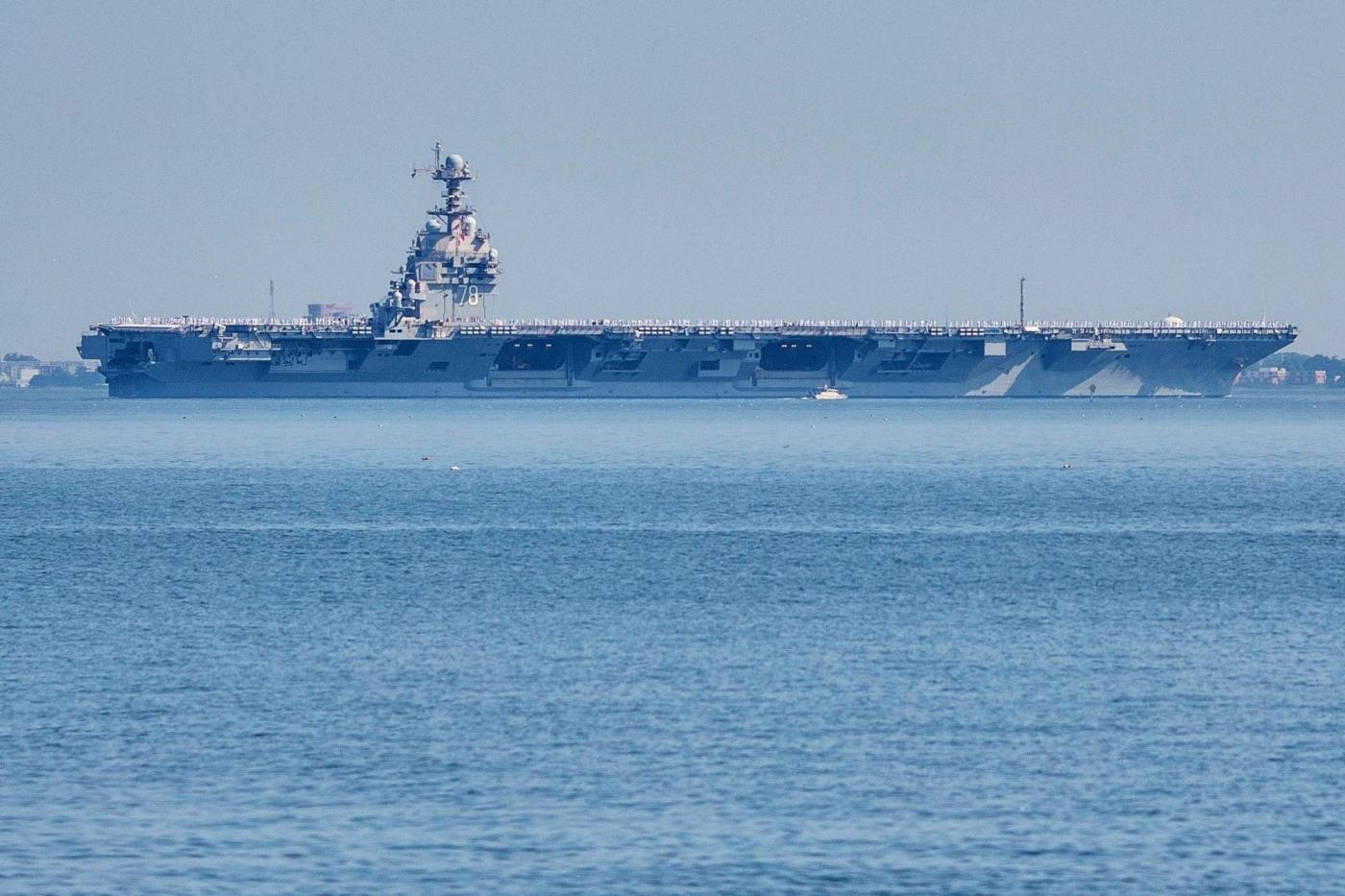
The legality of the strikes has come under fire from human rights advocates and experts in military law, as these operations target individuals who, for decades, were arrested at sea by the U.S. Coast Guard and brought to the United States for prosecution. The military actions are supported by a large contingent of warships, attack helicopters, and thousands of troops, along with advanced aircraft.
The Trump administration has defended its aggressive tactics, branding drug cartels in countries such as Venezuela, Colombia, and Mexico as “narcoterrorists.” The administration relies on a legal framework that argues the U.S. is in armed conflict with these groups, a rationale that gained traction after the events of September 11, 2001.
These military operations are intensifying pressure on Venezuelan President Nicolás Maduro, who has been charged with narcoterrorism in the U.S. Recently, U.S. forces escalated their actions by seizing an oil tanker allegedly involved in smuggling activities, a critical source of revenue for Maduro’s regime. In response, Maduro has claimed that the U.S. military’s true aim is to oust him from power.
Holsey’s retirement marks a continuation of a trend of sudden departures within the military’s upper echelons since Hegseth took over the Pentagon. Lt. Gen. Pettus, a seasoned fighter pilot with combat experience in Afghanistan and Iraq, will now lead the command, although it remains uncertain how long he will serve in this capacity. Any nomination from Trump must be confirmed by the Senate, adding another layer of complexity to the military’s leadership transition during a period of heightened scrutiny.