Recent findings from NASA’s Chandra X-ray Observatory suggest that smaller galaxies may not contain supermassive black holes as frequently as larger galaxies. The study examined a sample of over 1,600 galaxies, revealing a significant disparity in black hole presence between smaller and larger cosmic structures.
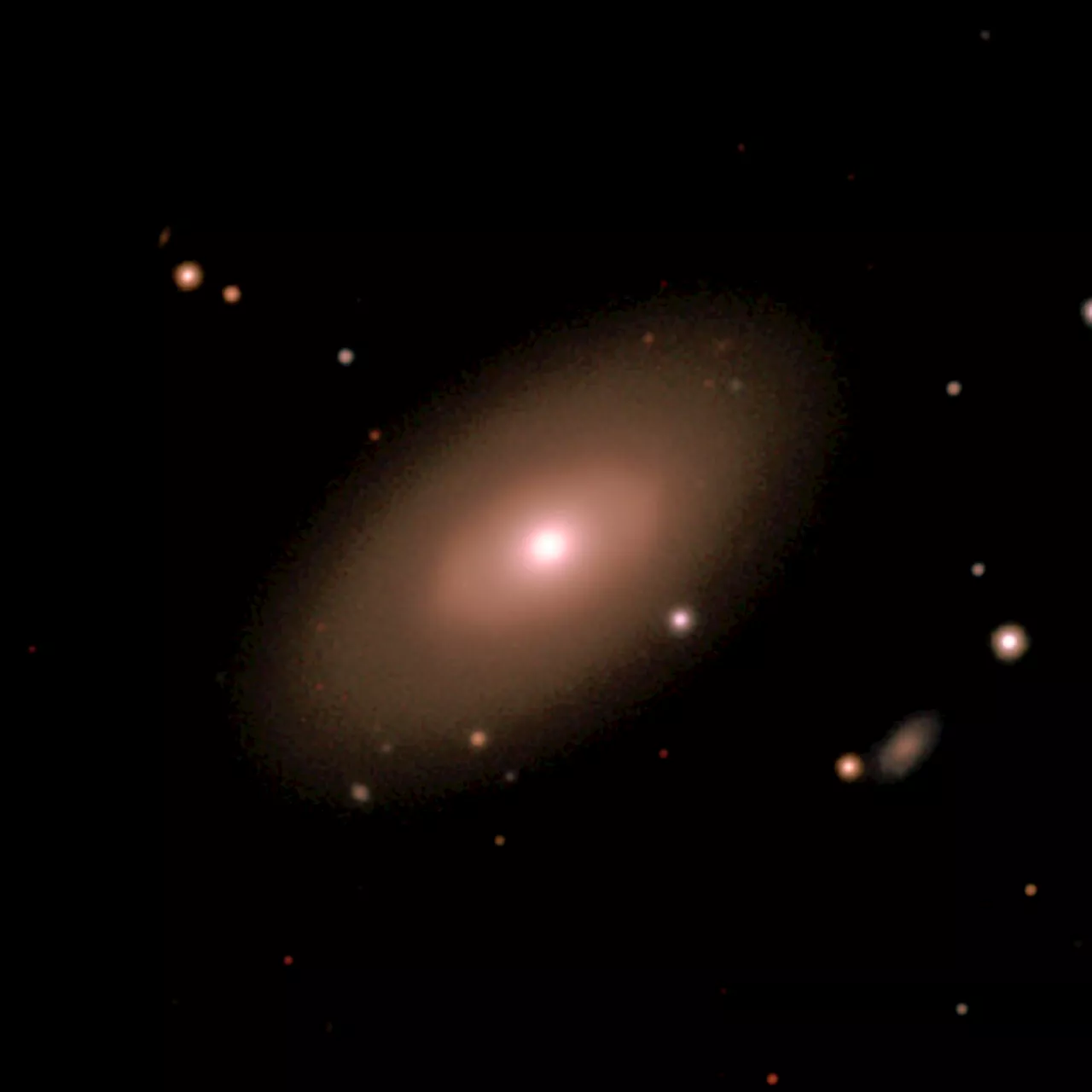
The research, published in The Astrophysical Journal, focused on galaxies such as NGC 6278 and PGC 039620. These two galaxies illustrate the findings, with the latter showing no evidence of a supermassive black hole at its center. This challenges the prevailing notion that nearly all galaxies harbor these immense gravitational entities.
For over two decades, astronomers have utilized data collected from Chandra to analyze galaxy structures. The study encompassed galaxies ranging from more than ten times the mass of the Milky Way to dwarf galaxies, which are significantly smaller. According to Fan Zou, the lead researcher from the University of Michigan, “It’s important to get an accurate black hole head count in these smaller galaxies. Our study gives clues about how supermassive black holes are born.”
The research indicates that as material falls onto black holes, it generates X-rays due to friction, making them detectable. The findings showed that more than 90% of massive galaxies, including those comparable to the Milky Way, contain supermassive black holes. In contrast, smaller galaxies did not exhibit clear X-ray signatures, suggesting a lower occurrence of these massive entities.
The study identified two potential explanations for the absence of X-ray sources in smaller galaxies. One possibility is that the fraction of galaxies with massive black holes is significantly lower among less massive galaxies. The other suggests that any X-rays produced by these smaller black holes are too faint for detection by Chandra.
Co-author Elena Gallo also from the University of Michigan, stated, “We think, based on our analysis of the Chandra data, that there really are fewer black holes in these smaller galaxies than in their larger counterparts.”
To draw their conclusions, Zou and colleagues examined both hypotheses. They found that the amount of gas falling onto a black hole influences its brightness in X-rays. Since smaller black holes are expected to attract less gas than larger black holes, they would naturally appear fainter and often undetectable. The researchers confirmed this expectation but noted an additional deficit of X-ray sources in smaller galaxies beyond what would be anticipated from gas availability alone.
This additional deficit supports the idea that many low-mass galaxies may simply lack black holes altogether. The implications of this finding could reshape our understanding of how supermassive black holes form. There are two primary theories regarding their genesis: one proposes that a massive gas cloud collapses directly into a black hole, while the other suggests that they originate from smaller black holes formed during the collapse of massive stars.
Co-author Anil Seth from the University of Utah, explained, “The formation of big black holes is expected to be rarer, in the sense that it occurs preferentially in the most massive galaxies being formed.” This observation helps justify why smaller galaxies do not possess black holes to the same extent as larger ones.
The findings also have ramifications for the rates of black hole mergers resulting from dwarf galaxy collisions. A lower number of black holes would imply fewer sources of gravitational waves detectable in the future by the Laser Interferometer Space Antenna.
NASA’s Marshall Space Flight Center in Huntsville, Alabama, oversees the Chandra program, while the Smithsonian Astrophysical Observatory’s Chandra X-ray Center manages science operations from Cambridge, Massachusetts, and flight operations from Burlington, Massachusetts.
This research marks a significant advancement in our understanding of the relationship between galaxy size and black hole presence, challenging long-held assumptions in the field of astrophysics.