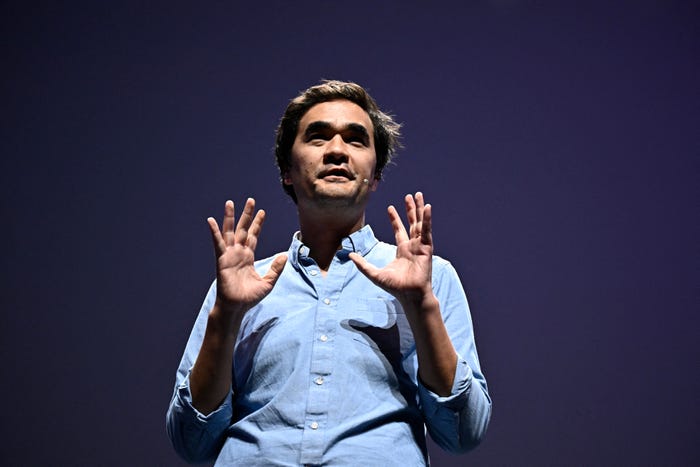
An executive from OpenAI has identified three job sectors poised for significant automation within the next few years. Olivier Godement, the head of product for business products at OpenAI, discussed these developments during a recent episode of the “Unsupervised Learning” podcast. The sectors identified include life sciences, customer service, and computer engineering.
Olivier Godement emphasized that the life sciences industry is particularly susceptible to automation due to the administrative tasks involved in drug development. He pointed out that pharmaceutical companies, such as Amgen, are already leveraging AI to streamline processes. “The time it takes from once you lock the recipe of a drug to having that drug on the market is months, sometimes years,” Godement stated. He believes AI models excel at aggregating and analyzing both structured and unstructured data, which could significantly reduce the time required to bring new drugs to market.
Godement, who joined OpenAI in 2023 after eight years at Stripe, acknowledged that while complete automation of white-collar jobs is not yet achievable, there are promising applications in areas like coding and customer service. He noted, “The automation is probably not yet at the level of automating completely the job of a software engineer, but I think we have a line of sight essentially to get there.”
The conversation around automation in software engineering has gained traction, particularly as AI-assisted coding tools become more integrated into corporate workflows. A study conducted by Indeed in October 2023 revealed that among tech roles, software engineers, quality assurance engineers, product managers, and project managers have experienced the highest rates of layoffs.
In addition to the tech sector, Godement believes that customer-facing roles, such as those in sales and customer experience, are also at risk. He shared his collaboration with T-Mobile, stating, “We’re starting to achieve fairly good results in terms of quality at a meaningful scale.” He anticipates that the next one to two years will reveal a surprising number of tasks in these areas that can be automated reliably.
The insights from Godement align with broader concerns expressed by other AI leaders regarding the future of white-collar employment. Geoffrey Hinton, often referred to as the “Godfather of AI,” has previously warned that technology will eventually surpass human capabilities in many intellectual tasks. He noted, “For mundane intellectual labor, AI is just going to replace everybody,” highlighting fields like paralegal work as particularly vulnerable.
As automation continues to reshape industries, the discussion about the future of work and the skills necessary for job security becomes increasingly relevant. While some sectors may see a decline in certain roles, others may emerge, necessitating a shift in workforce skills to adapt to this evolving landscape.