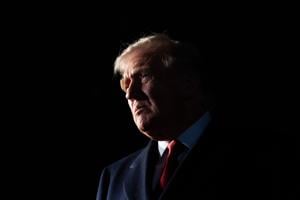
U.S. President Donald Trump will host the leaders of the Democratic Republic of Congo and Rwanda on March 15, 2024, for the signing of a peace agreement aimed at resolving the longstanding conflict in eastern Congo. The agreement, known as the Washington Accords for Peace and Prosperity, seeks to facilitate access to the region’s critical mineral resources for U.S. companies while addressing humanitarian issues stemming from decades of violence.
The deal, praised by the White House as a “historic” achievement, is the culmination of months of diplomatic efforts involving the African Union, Qatar, and other international partners. It builds upon a preliminary agreement reached in June 2023, reflecting ongoing attempts to stabilize eastern Congo, a region plagued by conflict with over 100 armed groups, notably the Rwanda-backed M23 rebels.
The situation in eastern Congo has deteriorated significantly this year, with the M23 capturing key cities such as Goma and Bukavu, exacerbating an already severe humanitarian crisis. Millions of people have been displaced, and fighting continues, with reports of clashes between M23 fighters and Congolese forces. Local residents express skepticism about the potential for lasting peace. “We are still at war,” said Amani Chibalonza Edith, a resident of Goma. “There can be no peace as long as the front lines remain active.”
The newly signed pact aims to establish a framework for regional economic integration, building on discussions held in November 2023. This framework will outline economic partnerships among the three nations, focusing on critical minerals, energy, and tourism. The U.S. administration is particularly interested in accessing Congo’s mineral resources, which are crucial for manufacturing technologies ranging from fighter jets to smartphones. This move comes as the U.S. seeks to reduce reliance on China, which currently dominates the rare earth minerals market, controlling nearly 70% of global mining and about 90% of processing.
Before the formal signing, Trump is expected to hold individual meetings with President Felix Tshisekedi of Congo and President Paul Kagame of Rwanda. The event will take place at the U.S. Institute of Peace in Washington D.C., with several other African leaders in attendance. The U.S. Chamber of Commerce is also organizing a gathering for American business leaders to explore potential investment opportunities in the region.
Despite the optimism surrounding the agreement, the reality on the ground remains challenging. Residents in Eastern Congo continue to report clashes and ongoing rebel advances. Both the M23 and Congolese forces have accused each other of violating ceasefire terms established earlier this year. The humanitarian situation has worsened due to cuts in U.S. funding for aid, leading to increased crime and inflation in areas like Goma.
“We are waiting to see what will happen because so far, both sides continue to clash and attack each other,” noted Moise Bauma, a student in Bukavu. Both the Congolese and Rwandan governments are promoting American involvement as a pivotal step towards achieving peace. “We need that attention from the administration to continue to get to where we need to get to,” said Yolande Makolo, a senior adviser to Kagame. “We are under no illusion that this is going to be easy. This is not the end but it’s a good step.”
The roots of the conflict trace back to the aftermath of the 1994 genocide in Rwanda, which led to mass displacement and the establishment of armed groups in Congo. Rwandan authorities accuse Hutu militias—formed by those fleeing the genocide—of posing a threat to Rwanda’s Tutsi population. The Congolese government insists that lasting peace hinges on Rwanda’s withdrawal of support for the M23 rebels, while Rwanda demands the disbandment of militias it perceives as a threat to its security.
As the situation evolves, the international community watches closely, hoping that the Washington Accords will pave the way for a more stable and prosperous future in the region.