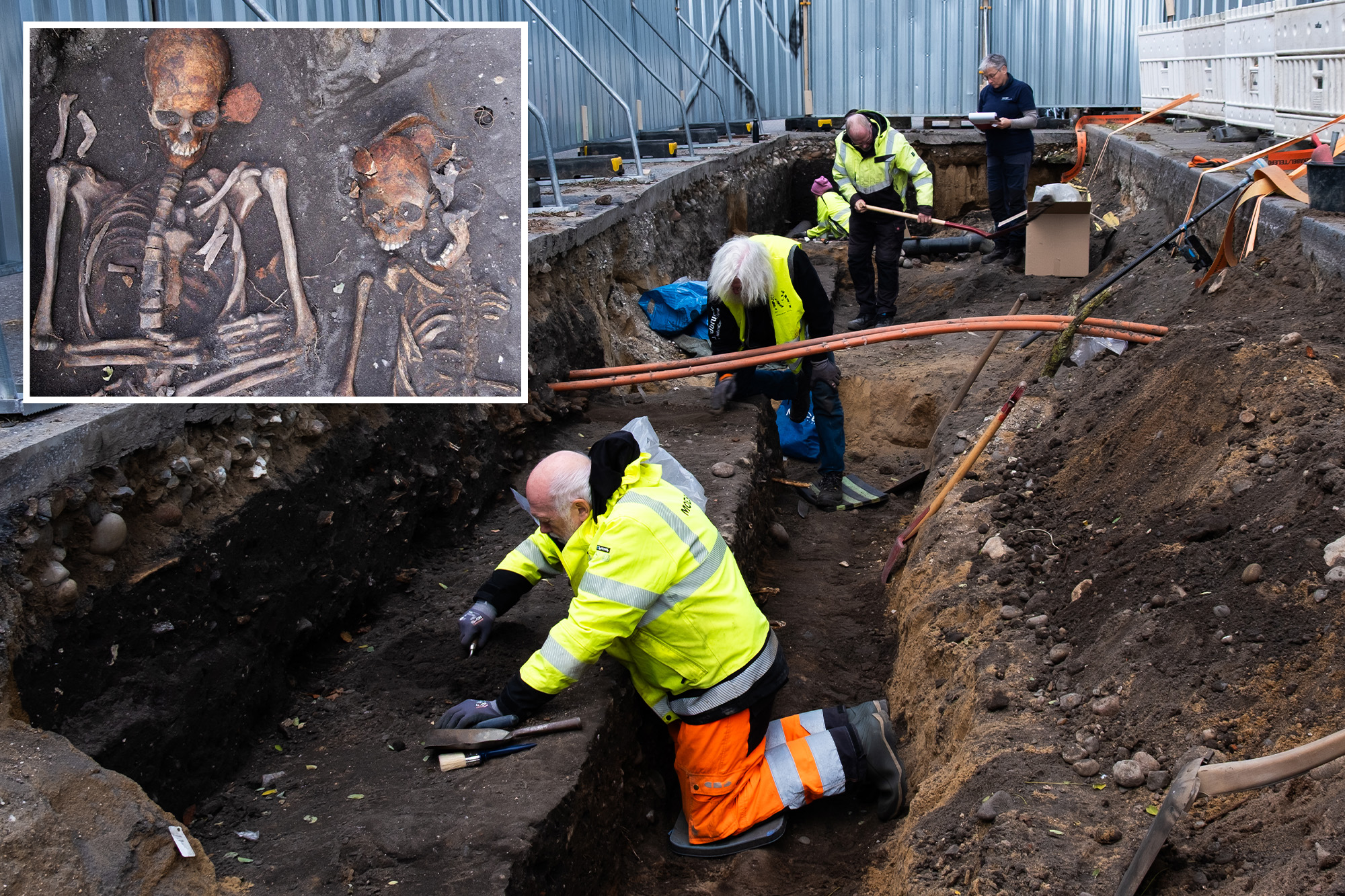
Danish archaeologists have made a significant discovery in Aarhus, unearthing dozens of medieval graves that illuminate the harsh realities of early Christian life in Denmark. The excavation, conducted by officials from the Moesgaard Museum, revealed a total of 77 graves at St. Oluf’s Cemetery, which operated from the 1100s until 1813. This cemetery, named after St. Olaf, a Norwegian king known for promoting Christianity in Scandinavia, offers a poignant glimpse into the past.
The graves, estimated to be up to 900 years old, were uncovered during a city project aimed at upgrading waste facilities. According to Mads Ravn, head of the museum’s local heritage department, the density and number of graves exceeded expectations. “It was much more than expected and very dense,” he stated. Ravn emphasized that these graves date from the 12th century, indicating a period when Christianity was firmly established in Aarhus, rather than a transitional phase.
Insights into Medieval Life
The cemetery served as the final resting place for the lower classes of Aarhus, contrasting sharply with wealthier individuals who were buried in the nearby cathedral, approximately 500 meters (1,640 feet) to the south. Ravn noted that this resulted in a densely packed burial ground, where new interments sometimes disturbed older graves, leaving some skeletons in disarray.
While few grave goods were found, a notable artifact emerged from one grave dated to 1626. This burial contained a coin placed in the mouth, a practice linked to local folklore suggesting that it was intended to ensure safe passage to the afterlife. Ravn pointed out that this custom may have roots in ancient traditions, such as those of the Greeks.
The excavation has provided valuable insights into the lives of poorer Christians in Aarhus. Ravn remarked, “This opens a door to understanding everyday life, and from other cemeteries we know that life was hard, with an average life expectancy around 37 years.” The remains reflect the prevalence of diseases, with one particularly disturbing find revealing three children buried atop one another, possibly victims of an infection or plague.
Understanding Disease and Mortality
The primary focus of the excavation has been disease-related findings. Ravn indicated that ailments such as leprosy, plague, and other waterborne illnesses were common during this era. He noted, “One could argue that this was the reason they could bring all the new diseases to the New World, where it took a hard turn on the Native Americans.” Further analysis may shed light on the specific diseases that plagued the population.
Reflecting on the conditions of that time, Ravn stated, “Life was hard and short back then, with many women dying in childbirth.” He concluded with a personal insight, “When people ask me if I, as an archaeologist, wish to have lived in the past — the answer is negative.” This sentiment encapsulates the challenging existence faced by early Christians in Denmark, a narrative now preserved through these significant archaeological finds.