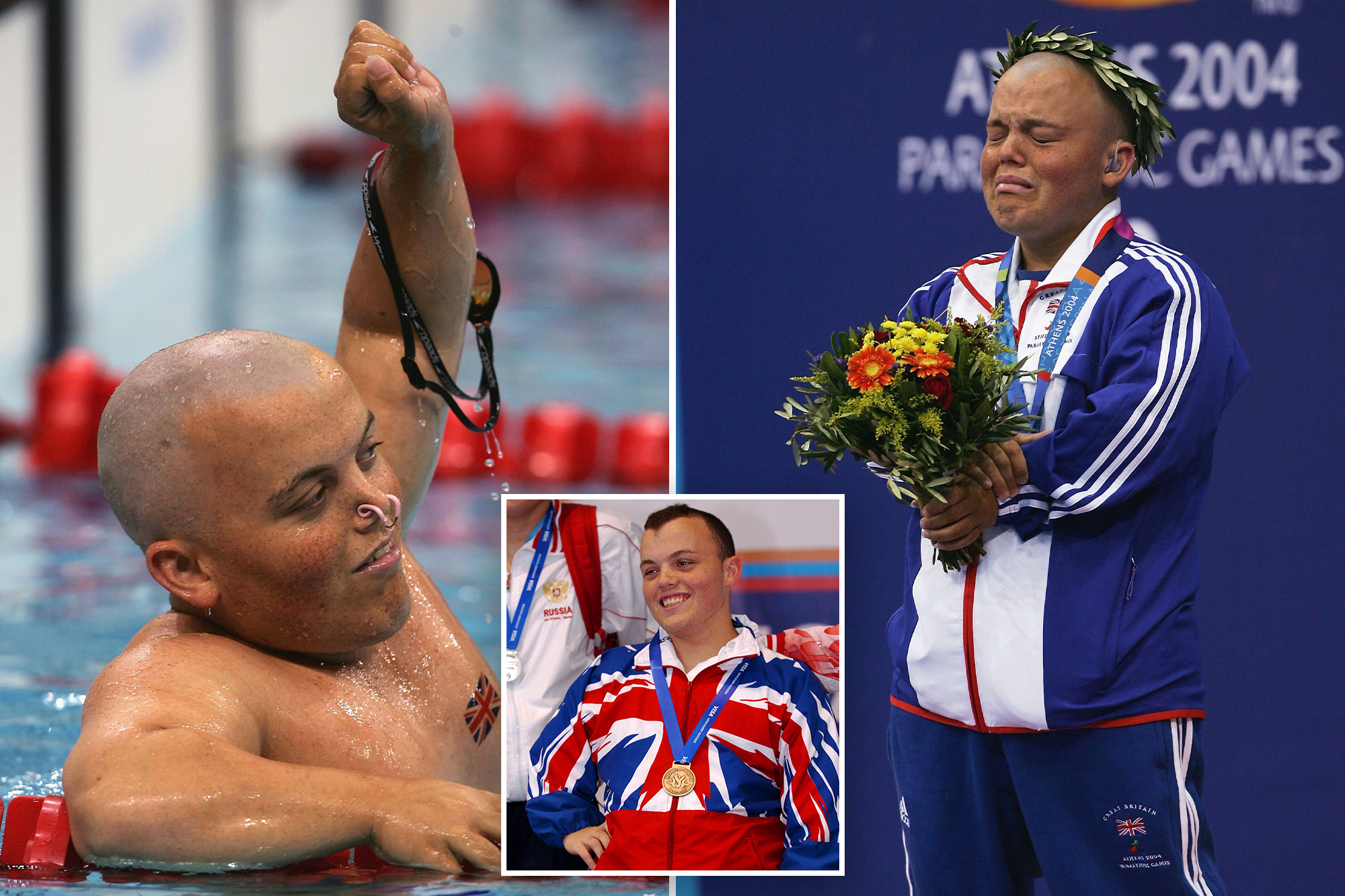
A British Paralympic gold medalist swimmer, Gareth Duke, has been sentenced following an online sting operation that exposed his attempts to engage with a minor. The 39-year-old athlete was caught by members of the Child Online Safety Team while he believed he was communicating with a 14-year-old girl. During the exchanges, which occurred between May 25 and June 2, Duke requested inappropriate acts, including asking her to strip for him.
In a hearing at Newport Crown Court, Duke received a six-month jail sentence, which was suspended for 18 months. He is also required to complete a 30-day rehabilitation program and must register as a sex offender. The court heard that Duke arranged for the supposed minor to travel approximately 140 miles from Portsmouth to South Wales for a meeting described as a “kiss and a cuddle.” Prosecutor Ben Jones highlighted that Duke was aware he was communicating with someone underage, as he stated that “age was just a number.”
Judge Matthew Porter-Bryant expressed concern over Duke’s actions, categorizing them as “predatory offending.” He noted, “You said that age was just a number. This was predatory offending and serious criminal behavior.” Despite this, the judge acknowledged Duke’s remorse and lack of prior convictions, leading to the decision to suspend his sentence.
Duke’s defense team argued for leniency, citing his health challenges. He is registered blind, undergoes kidney dialysis three times a week, and has significant hearing loss. His lawyer, Alice Sykes, emphasized that he has complex health needs and proposed that he could be managed within the community.
The Paralympian, who won gold in the 100m breaststroke at the Athens 2004 Paralympics and is a three-time medalist overall, faces additional legal restrictions. He will be subject to a seven-year sexual harm prevention order, designed to limit his online activities and reduce the risk of reoffending.
Duke has a personal history that includes Alport’s syndrome, a rare kidney disorder that has led to multiple health challenges. This condition contributed to his retirement from swimming in 2011 after undergoing kidney transplants from his father in 2006 and his uncle in 2010, both of which ultimately failed.
This case highlights ongoing concerns about online safety and the vulnerability of young individuals in digital spaces.